
Researchers have created a detailed cellular map of periodontitis
Opens the door to more targeted and transformative treatments.
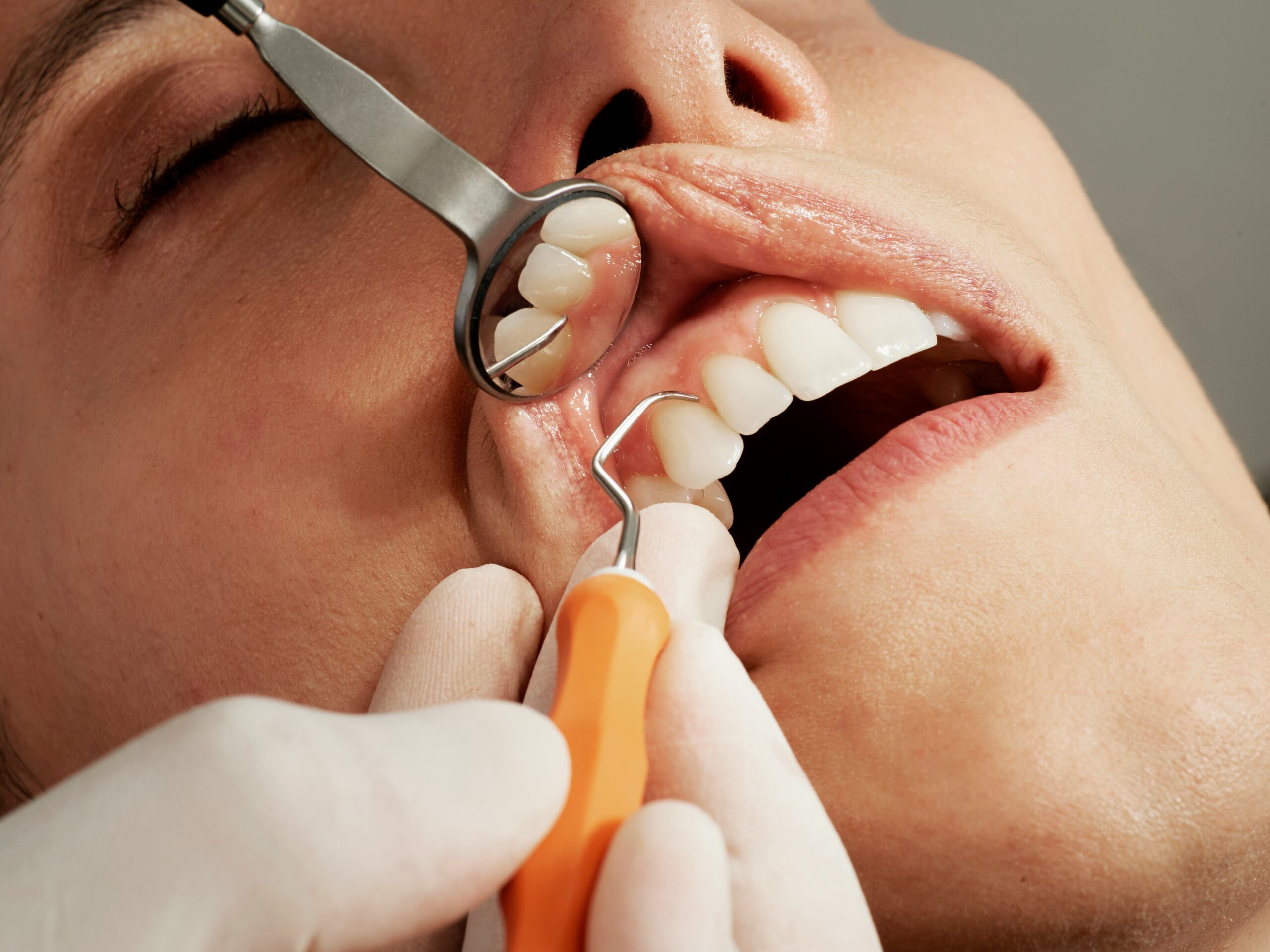
Researchers are using cutting-edge single-cell technology to map every individual cell in the gums, opening the door to more targeted and transformative treatments.
The research was led by Vitor C. M. Neves, Senior Clinical Lecturer at the University of Sheffield and Honorary Consultant in Periodontology, Translational and Regenerative Dentistry at Sheffield Teaching Hospitals NHS Foundation Trust, in collaboration with Wental Zhu from the Karolinska Institute and Cheng Zhang from King’s College London.
Their paper is published in the Journal of Clinical Periodontology.
To understand how diseases develop, researchers look for the biological changes that occur as tissue moves from health to disease. This new research focuses on the periodontium, the tissues that support the teeth, including the gums and ligaments. When periodontitis develops, these tissues become inflamed and scar-like, leading to bone loss and, ultimately, tooth loss. Despite the global impact of the disease, little is known about how this transformation happens at a cellular level.
In their study, the research team used an advanced computer-based approach known as single-cell RNA sequencing (scRNA-seq). It allows researchers to map every individual cell in a tissue and identify which genes are switched on inside each one. Unlike traditional methods that average signals across many cells, scRNA-seq reveals how different cells behave during health and disease, providing a detailed picture of how gum tissues change as periodontitis becomes established.
By applying this approach to both healthy and diseased human periodontal tissues, the researchers generated a high-resolution cellular map of gum disease. The findings show that the gingiva, or gums, contribute the largest number of cells in an intermediate state between healthy tissue and diseased granulation tissue. This suggests that targeting specific gum cell populations could help slow or prevent disease progression.
The team also identified a previously unknown vascular stem cell population marked by the gene NOTCH3, found exclusively in diseased tissue. These cells appear to be attempting to regenerate bone in areas where it has been lost. However, the study suggests that fibroblasts, cells normally involved in tissue repair, may disrupt this regenerative process, redirecting healing responses towards the formation of diseased tissue rather than bone.
The data shows that this tissue has a complex microenvironment, containing both cell populations that may hinder healing and others that could support regeneration. Current periodontal therapies do not specifically target these cells or the biological pathways identified in the study, highlighting an opportunity to develop new treatments that better modulate the body’s response to disease.
While the dataset was generated primarily to support further experimental research, its use of human tissue means it could ultimately transform how periodontitis is treated. In the long term, therapies based on targeting specific cell populations or pathways, such as the Notch signalling pathway, could significantly advance periodontal disease management.