

Must it be this way?
Vermilion’s biennial event outlined a vision for the future of Scottish dentistry.
Ever heard of SNIP? It stands for: ‘Situation, Need, Ideas, Plan’. It is a structured approach used for problem-solving, decision-making and communication.
The first step involves defining and understanding the problem. Next, the specific need or goal is identified. Then come the ideas; this step encourages creative thinking and exploring various possibilities without immediate judgment. Finally, agree a plan; evaluate the ideas, select the most appropriate and create a concrete, actionable plan.
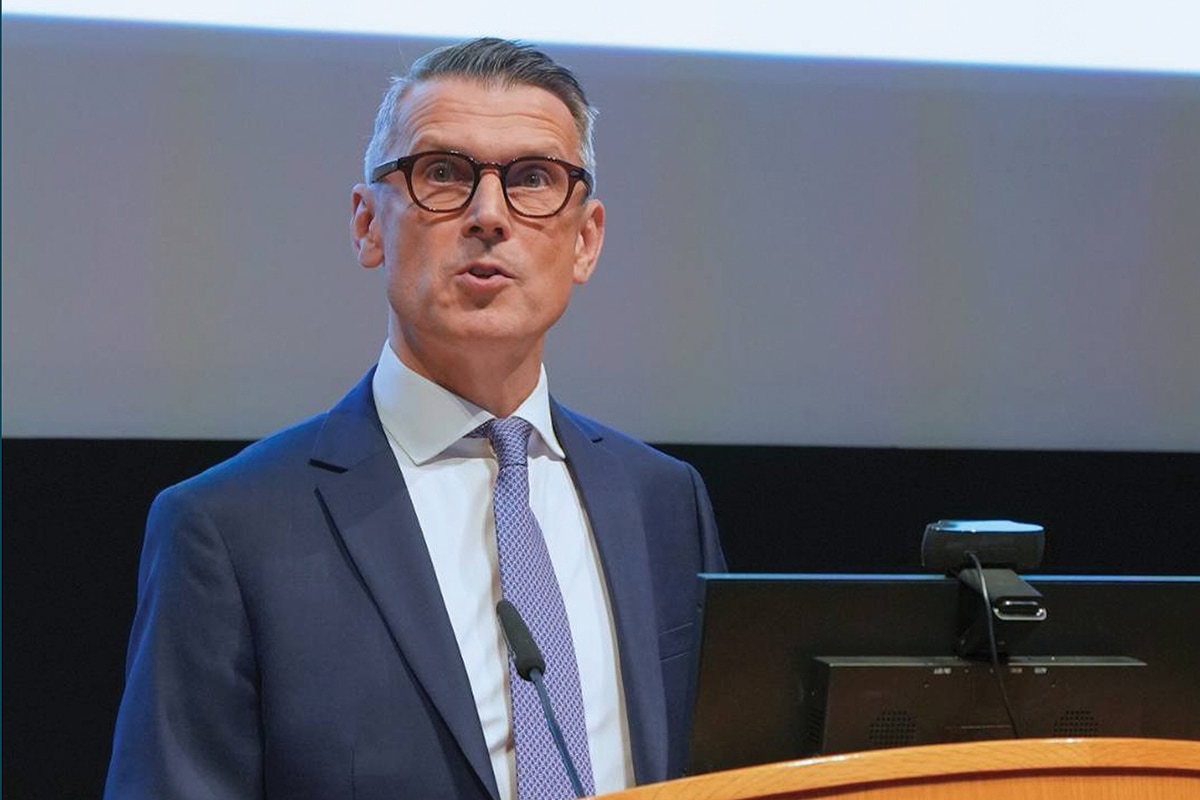
SNIP was the approach taken by Dr David Offord in his talk at the Vermilion Biennial Symposium in Edinburgh at the beginning of October. The symposium’s title? The Future of Scottish Dentistry and Career Pathways in Primary Care. As well as Dr Offord, Vermilion’s Practice Principle, speakers included Jim Hall, founder and Chief Executive of Clyde Munro, Professor Ewen McColl, Head of Peninsula Dental School, Professor Richard Ibbetson, Emeritus Professor, University of Aberdeen and University of Lancashire, Dr Ian Mills, Honorary Associate Professor at the Peninsula Dental School, and Anas Sarwar MSP, BDS, leader of the Scottish Labour Party.
[there is a need for a] long-term, partnered thought through fully funded modern workforce plan
Anas Sarwar, MSP
The context had been set out by Dr Offord in the run-up to the symposium; Scotland, he said, is confronting a deepening dental crisis with workforce contraction and patient access barriers across the country. The landscape is marked by a dual problem; a severe decline in NHS primary care provision, manifesting as practice closures and limited patient access, particularly in rural and non-city areas, such as Fife, Moray and Dumfries and Galloway, and a critical erosion of NHS secondary care capability, notably within the Lothian region.
As revealed by Scottish Dental magazine, Edinburgh University has withdrawn its funding from the Edinburgh Dental Institute (EDI). Recruitment to its undergraduate and postgraduate dental education programmes had been “paused”, a spokesperson confirmed.
Nationally, statistics reflect a public health crisis with severe consequences for Scotland’s most vulnerable populations. The gap in dental participation rates between children from the most and least deprived areas has widened dramatically from 7% in 2010 to 20% in 2022, creating a two-tier system that abandons those who need care most.
“We’re seeing patients resort to dangerous DIY dentistry, travelling hundreds of miles for treatment or going without care entirely,” Dr Offord told Scottish Dental. “This isn’t just about oral health. Untreated dental problems can lead to serious systemic health issues, emergency hospital admissions and, in extreme cases, life-threatening infections.”
The symposium challenged political leaders to deliver concrete solutions to the crisis. It called for:
- A new, fully funded NHS contract making primary care dentistry an attractive career option, thus improving patient care
- A comprehensive national dental workforce plan with long-term funding commitments
- The establishment of a new Edinburgh Dental Hospital and School to provide integrated training of dentists, specialists and dental care professionals.
Addressing the audience for his talk, titled Must it be this way? A vision for the future of Scottish dentistry, Dr Offord said: “We need to be bold, unconventional, demanding. We need to turn Scottish dentistry around. What is the situation? What do we need? Let’s generate some ideas and then agree a plan.
“What is the situation? We have NHS dentists leaving the workforce for private practice. They see better remuneration. They see better work/life balance. A three-and-a-half day working week. They see the opportunity to offer complex treatments outwith NHS parameters.
“Health inequalities are stark. There is a frightening gap developing in participation rates of the least and most deprived children. We hear reports of people resorting to DIY dentistry or switching to private care due to lack of NHS access.
“We have seen a decrease in graduate numbers due to COVID-19 disruption. There have been shortfalls in VT recruitment in 2024-25. This is a particular issue in rural areas. Systemic financial pressures are very real. The increase in operating costs has created a critical landscape for practice owners who, because of the increase in National Insurance, cannot give their staff pay rises.”
Dr Offord also highlighted the situation in Lothian, which is experiencing a significant growth in population at the same time as the supply of dentists is expected to fall short of the number required to maintain the current registration rate. “We have to talk about ‘the Edinburgh problem’,” he said.
Dr Offord referred to the closure of the Edinburgh Dental School and Hospital in 1994. The closure was accompanied by plans to replace the school and hospital with the Postgraduate Dental Institute, which became the EDI in 1997.
However, significant concerns were expressed at the time regarding the EDI’s potential effectiveness and viability; concerns which have come to pass. “The current challenges faced by secondary care in Lothian are not recent phenomena, but rather a long-term consequence of historic political and financial decisions that have had a ripple effect spanning decades,” said Dr Offord.
Waiting times for Lothian dental services reveal a severe and deteriorating access crisis, he said. It holds the Scottish record for a patient’s waiting time; 169 weeks. The longest wait for a child’s tooth extraction was 70 weeks and for an adult, two years. The average waiting time for oral and orthodontic surgery has increased by 320% in the past five years. “These waiting times are significantly longer than NHS Scotland’s national target of 18 weeks from referral to treatment,” said Dr Offord.
“This profound disparity represents a severe and deteriorating crisis in secondary care access, a fundamental inability of the system to provide timely and necessary specialist treatment, leading to prolonged patient suffering. This contrast between stated standards and the lived experience of patients in Lothian hides a critical failure in service delivery.”
Dr Offord added: “Scotland, as a country, cannot afford to continue to underinvest in oral health. The health economics of inaction are frightening.” He pointed to two reports commissioned by the European Federation of Periodontology; Time to take gum disease seriously, published in 2021, and Time to put your money where your mouth is, published in 2024.
The first argues that periodontitis is a major, yet preventable, public health crisis across Western Europe with severe societal and economic consequences. Despite advanced healthcare systems, the prevalence of periodontitis has remained largely unchanged for the past 25 years. Crucially, the report highlights that periodontitis is associated with more than 50 non-communicable systemic diseases, including diabetes and cardiovascular disease. The report called for an urgent shift in focus, from treating advanced disease to preventative care and improving access to care.
The second analysed the profound and unequal global burden of dental caries and severe periodontitis, which collectively affect nearly half the world’s population, surpassing the prevalence of the five most common non-communicable diseases (NCDs). The report highlights that the most deprived populations experience a disproportionately high disease burden and face major barriers to accessing care, often resulting in invasive, costly treatments such as tooth extraction rather than prevention or restoration.
Its core argument is that oral health is critical to overall systemic health and policy must pivot from an expensive, reactive ‘restorative’ model to a proactive, preventive approach to tackle deep socioeconomic inequalities.
“We have poured all of our resources into treating the consequences of caries and perio with ever more complex, expensive treatments,” said Dr Offord, “while ignoring the fact that these diseases are largely preventable.
“We need to understand the value of oral health in overall health and wellbeing. We need funding, long term funding; we need a fundamental shift to understand that investing in oral health, and achieving a paradigm shift to primary prevention, will yield a net saving for the National Health Service.”
Dr Offord cited the example of Japan which, in 1989, initiated the 8020 Campaign aimed at ensuring that people still have 20 of their original adult teeth when they reach the age of 80. Over the course of the campaign, the percentage of people achieving that 80/20 goal has grown fivefold, from around 10% to around 50%. It has not only improved their quality of life but is also linked to better overall physical and mental health.
In terms of the workforce, Dr Offord said there needs to be a “comprehensive national dental workforce plan with a long-term funding commitment. We need dentists, nurses, therapists, technicians.” It is clear, he said, that there is a need for a new, fully funded NHS contract and a complete overhaul of the Statement of Dental Remuneration, placing prevention at the centre. “We need to make NHS dentistry an attractive career option and show the possibility of career progression within NHS care,” he said.
Having covered the ‘situation’ and ‘needs’, Dr Offered moved to ‘ideas’ and ‘a plan’. He conceded that there were many more people more capable than him in advising politicians on the best way to develop a new contract, but he said he wanted to suggest one idea; that is, a core service. “Think of it like a menu in a restaurant,” he said, showing a slide with treatments available under an NHS core service on one side and private treatments on the other.
| NHS Core Service | Private Treatments |
|---|---|
| Check-ups | Crowns |
| Periodontal assessments | Veneers |
| Professional mechanical plaque removal | Bridges |
| Fissure sealants | Molar RCT |
| Fillings | Implants |
| Extractions | Aligners |
| RCT for incisors, canines and premolars only | Composite bonding |
| Acrylic dentures | Orthodontics |
“It’s about saying as a country we can no longer afford for patients to have the full a la Carte on the NHS. Crucially, public funds that are currently being spent on crowns, bridges and so on should be redirected into preventative care,” said Dr Offord.
“We can see a symbiosis of NHS and private dentistry resulting in two income streams and a fulfilling, varied practice requiring skills progression.”
He cited Professor Nicola Innes, head of Cardiff Dental School, who put forward ideas that could effect change and be sustainable; fully deploy dental therapists and hygienists; reform the NHS contract without losing continuity of care; align training to the model of care; and back the Dental Schools Council’s call for an increase in dental training places.
Dr Offord also outlined his proposal for a new Edinburgh Dental Hospital and School, with a community-based learning approach as pioneered by the University of Plymouth’s Peninsula Dental School and recently adopted by the RCSI University of Medicine and Health Sciences for its new undergraduate Bachelor of Dental Surgery (BDS) degree programme. Dr Offord said the new Edinburgh Hospital and School could, for example, be based at the Easter Bush Campus, south of the city centre, which currently incorporates The Royal (Dick) School of Veterinary Studies, the Roslin Institute, and several other research institutes and laboratories. It could also have hubs in Glenrothes, Bathgate and Galashiels; areas suffering a lack of access to dental care.
He called on Mr Sarwar, if elected as First Minister next year, to create a task force to devise a “radical prevention-based contract for primary care”. In his speech, Sarwar shared a powerful anecdote from his time as a dentist in Paisley, which at the time had the worst oral health record in Scotland. He linked this poor health to “deep, deep, generational inequality and deep, deep generational poverty”.
He recalled having to perform numerous full dental clearances, extracting all teeth and fitting acrylic dentures, on patients as young as 18 and 19 years-old. He highlighted the need for greater connectivity in healthcare, linking drug prevention with oral and wider health.
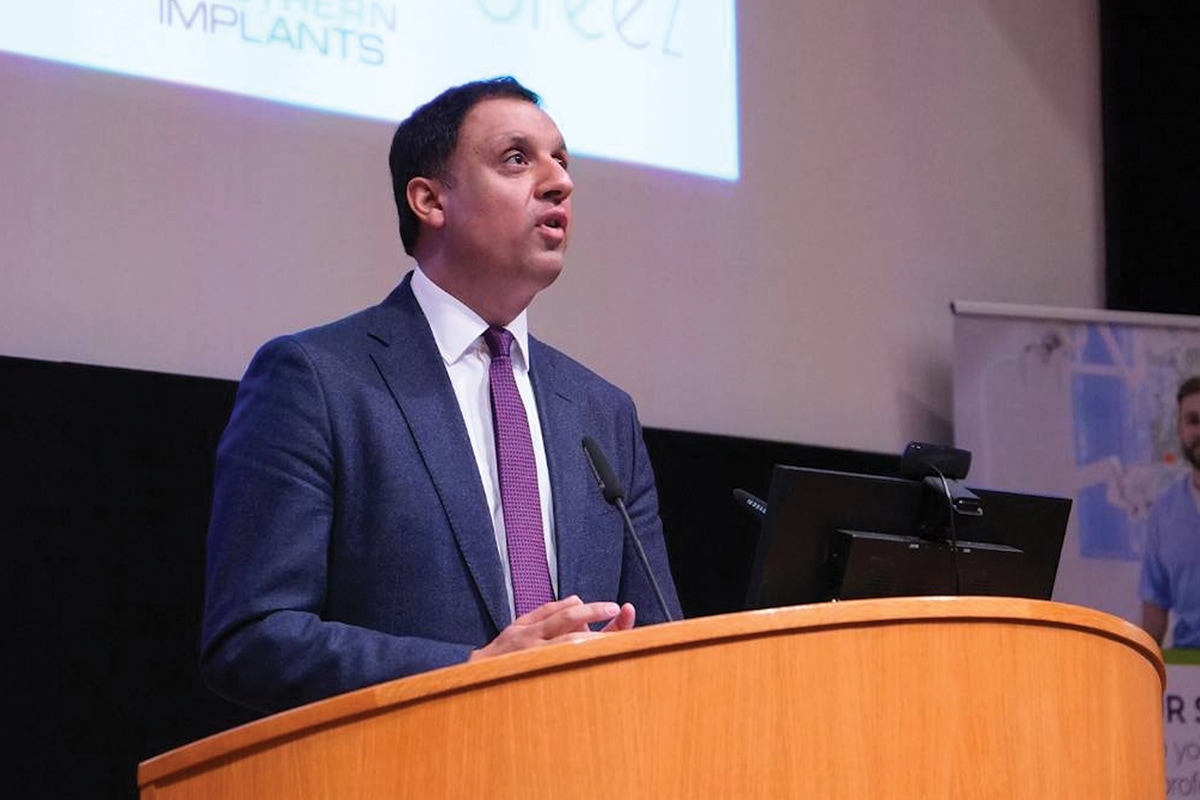
Sawar said that NHS dentistry in Scotland in its current form will not survive. He outlined three broad areas for reform:
1 Stripping back bureaucracy
Sarwar argued that the NHS has a “bureaucracy and management headache” for a population of five and a half million, with 14 territorial boards, six specialist boards, and 30 integrated joint boards. The goal would be to strip back bureaucracy and empower frontline staff. It would mean fewer chief executives, finance directors and managers, and more dentists, nurses, doctors and clinicians.
2 Modernising the NHS
The current NHS system is viewed as being stuck in the 20th century, he said, and the system needs to be brought into the 21st century, addressing issues like the continued use of fax machines.
This involves embracing technology for accessing care and information, and integrating digital and AI into the health and social care system.
3 A credible workforce plan
Sarwar stressed the critical need for a “long-term, partnered and thought through fully-funded modern workforce plan,” which Scotland has lacked for more than a decade. The plan must match skills, colleges and universities with the workforce pathway. It must ensure talent is attracted and retained in all parts of the country, including the south of Scotland and rural areas, by providing training places and educational opportunities outside of the central belt.
He said he believes fundamental reform of NHS dentistry is required, which should also be part of a broader reform of the entire NHS. He wholeheartedly agreed with Dr Offord that the balance must shift toward preventative care, so the NHS becomes a “national health service” rather than a “national sickness service”.
The system must be led by dentists, as those currently proposing solutions often “don’t understand or haven’t experienced or lived NHS dentistry”. Any new NHS contract and new model for NHS dentistry must include remuneration as a central part of the discussion and negotiation, he said.
Sarwar identified two “false measures of success” that need to be addressed:
- The proportion of the population registered with an NHS dentist. This is misleading because patients may remain on the register long after they have last been seen.
- Age groups eligible for free dentistry. This is irrelevant if there is no dentist available to deliver the care. Sarwar likened it to giving someone a free bus pass but having “no bus for you to take.”
The overall goal must be a system that is accessible in every part of the country. Sarwar noted that more practices are taking fewer NHS patients, and more parts of the country are not allowing people to register for NHS treatment.
Reform needs to result in more graduate dentists staying in dentistry and making the job more attractive, providing both personal value and a feeling of giving back.
Sarwar concluded by stating that his team is committed to doing the necessary “thinking and modelling” before the election to build a credible and deliverable programme, which includes pulling together “key thinkers and delivery agents” if Labour is elected to government.
Find out more about the Vermilion Biennial Symposium 2025 on the Vermilion website.