
Looking to the future with Scotland’s new CDO
In a Q&A with Scottish Dental, Gillian Leslie says she wants to see improved pathways for dentists and to make it possible for patients to have direct access to dental therapists

Why did you choose to study dentistry?
I always wanted to do something in healthcare and when I looked at the options, dentistry seemed like a career which offered a degree of flexibility. I was keen to travel, and it was a career I thought I could travel with.
After graduating, you joined the Royal Navy. How did that come about? And can you tell us about your experience of the second Gulf War?
My time away at war was a formative period in my life where I experienced the best and worst of human life
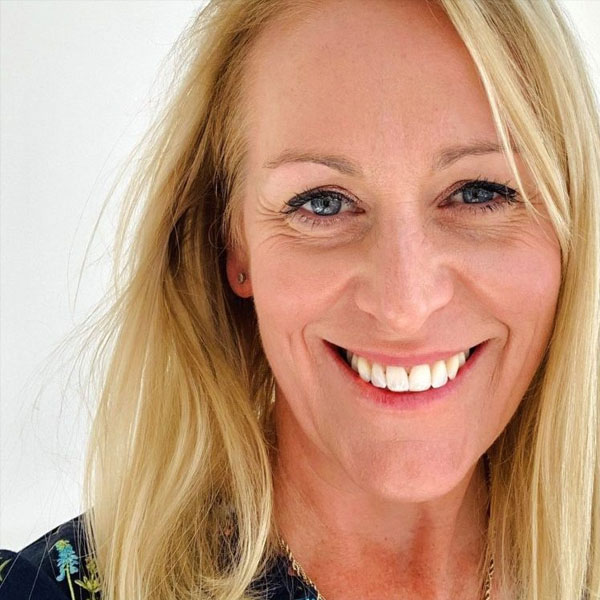
Gillian Leslie, Chief Dental Officer for Scotland
There was a day in final year when a group of dentists came to discuss different careers in dentistry. A Royal Navy (RN) officer from Faslane talked about the Navy and I thought it looked like a fun thing to do. I decided to apply and was very surprised when I passed the Admiralty Interview Board. I completed basic training, my Vocational Training, and was then appointed as a fleet dental officer in Plymouth. During this time, I was the dentist for a fleet of ships travelling around the world – which was an incredible experience.
Following this, I was appointed to the Royal Marines, which was highly unusual for a woman at the time. I was one of the first female officers to be appointed to a marine unit and, indeed, was the first RN female dentist at the front line during a war.
My time away at war was a formative period in my life where I experienced the best and worst of human life. You see and experience things that you shouldn’t in life and that can stay with you for a long time, but equally the comradeship is second to none. I loved my time in the RN; I would thoroughly recommend it.
Talk us through your subsequent postings; what kind of practice did they entail?
Following my time with the Marines, I was posted to the US Navy for a year at USS Osborne, north of Chicago, to complete an internship in exodontia. I took out more than 4,000 teeth, mainly 8s as the US Navy required all wisdom teeth to be removed prior to graduation from training. From there, I went to Germany to set up a referral service for extractions, minor oral surgery and sedations. After this, I decided to complete my Membership of the Faculty of Dental Surgery (MFDS) and moved to Queen Alexandra Hospital in Portsmouth. From there, I served at Faslane Naval Base twice and with the Loan Service in Brunei.
And your time in the Maxillofacial Unit at Queen Alexandra Hospital in Portsmouth?
This was a fantastic experience. It was when dentists were allowed to be medical senior house officers. It was rather scary at times, dealing with often serious medical complications but it was a real challenge which I loved.
We mainly dealt with trauma and oncology and were often in surgeries lasting 15 hours. It was incredibly interesting but also taught me so much about cancer and how, as dentists, we have a huge part to play in the education of patients and in the early detection of head and neck cancers.
Tell us about Bridge Dental Care, establishing and developing the practice.
I left the Navy after I had my eldest daughter. It was a huge decision for me to make but it was the right one for us as a family. I worked as an associate for a year or two, then decided I wanted to open my own practice.
I bought the practice which is now Bridge Dental Care. It was very run down and needed significant building work and modernisation. I had to close it for two weeks and it was like an episode of DIY SOS; at one point I counted 17 builders in a room.
The practice, like many others, is thriving. It is a mixed economy practice which offers both NHS and private. It has, as many practice owners will understand, been a labour of love. It has not always been easy, and there have been some very challenging times over the years, but the hard work has been worth it. I have an incredible team of dentists and nurses and when I am not in St Andrew’s House with the Scottish Government, I continue to work from my office in the practice.
What led to your appointment as one of the three Deputy Chief Dental Officers?
I have always been interested in how government works and how individuals can influence policy, particularly those that affect healthcare. Prior to the pandemic, I was part of a Scottish Government group that was working on the reform of Determination 1. Covid halted that work and we entered a very uncertain time; it was very stressful for all in the dental team. As a member of the Lothian Local Dental Committee, I worked hard with other members, committees and associations to help the profession inform the CDO team of what was happening in practices and how Covid was impacting us. I liked the idea that you could effect change. I applied for the position and was delighted to be appointed.
What has that experience been like and what progress do you think has been achieved by you and your colleagues in the office?
I have been Deputy CDO alongside Gavin McLellan for the past three years, and I think as part of the CDO team we have achieved a significant amount under Tom Ferris’s leadership.
The post-pandemic years have been fiscally challenging within all four nations and for the team
to be able to develop and deliver on payment reform, that cannot be underestimated. I’m not saying it is perfect, but I believe we have made a positive step in the reform of the NHS dental offer.
Being part of the Scottish Government and being embedded within the civil service has been a steep learning curve. We have a language and they have a language and it was difficult to navigate initially, but I feel confident in my ability now to perform as the Deputy Director of Primary Care and the Chief Dental Officer within the civil service structure.
What do you think are the main challenges for the profession and policymakers in Scotland?
As previously mentioned, fiscal challenges are always going to be the main issue for both. Workforce is improving but many practices, particularly in rural areas are still struggling to recruit associates and
dental nurses.
Oral health is still a problem in our most deprived areas and inequalities remain for certain groups.
This has a knock-on effect on waiting lists in the Public Dental Service (PDS) and the Hospital Dental Service (HDS), particularly concerning general anaesthesia for paediatric patients. Skill mix is also a key issue which requires further development.
What do you hope to achieve while in office?
As you will be aware, the Scottish elections are in May and the incoming government, whatever the colour, will determine the majority of the policy during my time in office.
I would, however, like to see improved pathways for dentists to develop enhanced skills and deliver more services within primary care. I want to make changes to regulations to allow direct access for therapists, to work at their full scope of practice; further developing that important skill mix.
By bringing more services into the community I would like to see an improved offer for patients which, in turn, would reduce inequalities and waiting lists. By offering improved professional pathways I would hope to retain dentists and nurses within the NHS.
I also want to see the development of a more accessible training pathway for our dental technicians who are so important to our everyday working lives.
Are there any upcoming initiatives you would like to flag to our readers?
We have just laid down secondary legislation for changes to Prior Approval and Mandatory Training.
Both are still in development and negotiation with the BDA, but the intent with Prior Approval is that we will move away from the financial limit and it will be about clinical treatment, particularly those items such as crowns/bridges/endo and/or a combination of these items. Certain items which are causing the financial limit to be reached such as dentures, sedation and multiple extractions will be removed.
For Mandatory Training, all dentists entering Scotland will still be required to complete it, however, if they fall between the quarterly courses they will be allowed to provisionally list. If they do not complete or pass the training within six months they will be delisted. This is only for dentists who are registered with the GDC.
What are you working on in your first days in office?
My first days in office are like starting any other job. I am becoming acquainted with a new way of working and the teams across my division. It’s about learning about what works and what doesn’t work, then going from there.
When not working, what are your interests and how do you unwind?
I enjoy meeting friends and family and unwinding over a good meal. Exercising is key for me to switch off, whether that be going for a walk, a run or a swim. My daughters are the most important thing in my life; being with them when not at work is the highlight.