
Researchers develop nature-inspired toothpaste for sensitive teeth
It includes a material originally developed for bone grafting
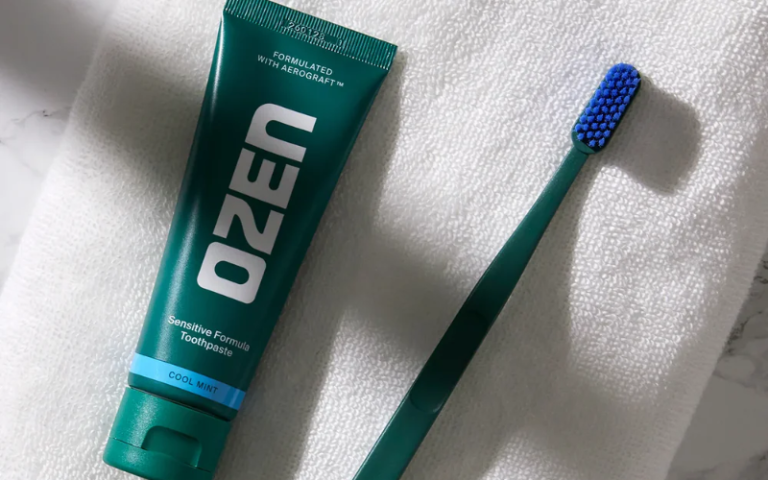
Picture by OZEN
A new toothpaste for relieving tooth sensitivity has been developed by UCL researchers using a nature-inspired material that supports bone regeneration.
The technology, developed by scientists at the UCL Centre for Nature-Inspired Engineering (CNIE), includes a material originally developed for bone grafting, called AeroGraft, with a novel structure that can rapidly rebuild tooth surfaces with material indistinguishable from bone.
Unlike most sensitive toothpastes, which work by either numbing the nerve or slowly blocking tiny channels inside the tooth over days or weeks, AeroGraft quickly seals exposed tubules while releasing calcium and phosphate ions to form a protective mineral layer on the tooth surface.
Tooth sensitivity occurs in around half the UK population. It can lead to significant pain and cause people to avoid certain foods, impacting quality of life. The new technology has been licensed for development into a new range of toothpaste and oral gel called OZEN.
Professor Marc-Olivier Coppens leads the development team, supported by Dr Niall Kent, both of UCL Chemical Engineering and the CNIE.
Professor Coppens said: “This work grew out of fundamental research into hierarchically structured catalysts as well as nature-inspired materials and how they support mineral regeneration in the body. What has been particularly exciting is seeing the science translated from lab research into a consumer product that can unlock real world benefits for people.”
UCL’s commercialisation company, UCL Business (UCLB), has worked closely with the research team to protect the intellectual property, explore commercial routes and secure the right partner to take the technology to market. The technology was licensed to Matrix, the consumer health company behind OZEN, which has developed and launched the product line.
The underlying technology was developed by researchers at UCL, as part of wider work into nature-inspired engineering for sustainable manufacturing and health. The core ingredient is a natural substance used to help graft bones together, supporting mineral regeneration.
During development, the team recognised that the same mechanism could be applied to dentistry, where sensitivity is caused by exposed microscopic channels in the tooth surface.
Dr Anne Lane, CEO of UCLB, said: “For over 30 years, we’ve helped UCL’s research make the transition from the university into real-world commercial ventures across every academic discipline – from gene therapies for cancers and rare diseases to AI algorithms.
“We’re proud to have played a pivotal role in helping the technology behind OZEN on its journey from the lab to the pharmacy shelf, potentially helping millions of people with sensitive teeth.”
Comments are closed here.