
Neanderthals used stone drills to treat cavities
Molar found in Siberia appears to show the earliest known evidence of dental treatment
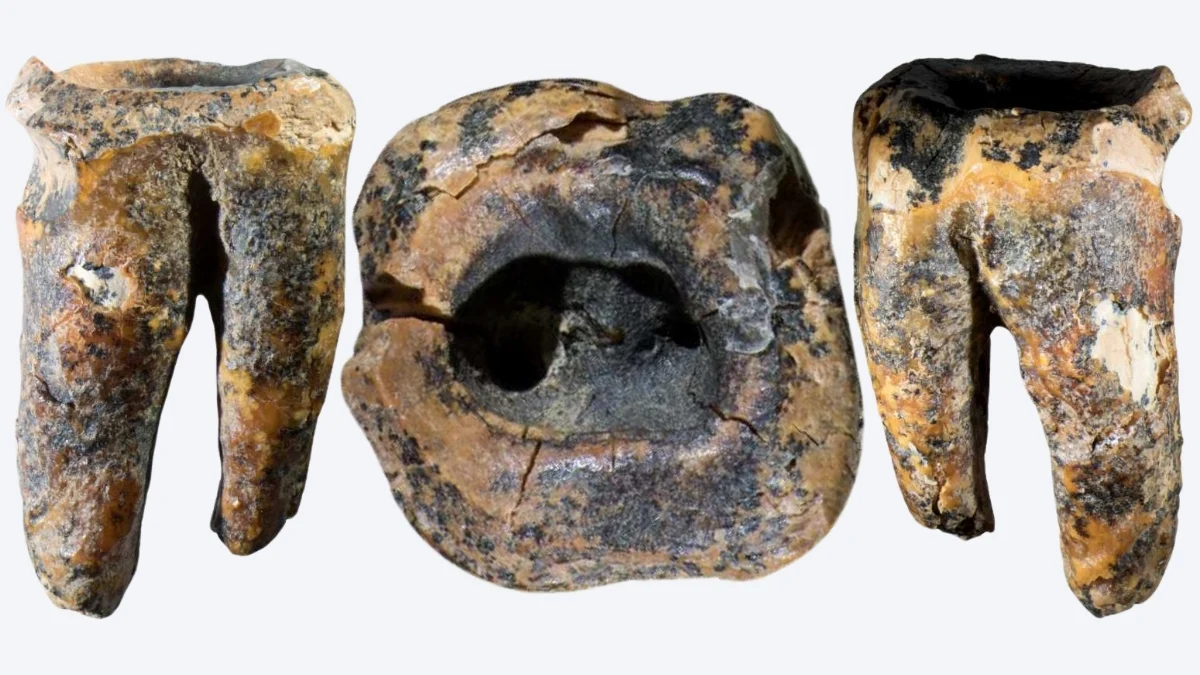
The tooth viewed from different angles.
Neanderthals used stone drills to treat cavities 59,000 years ago, in what is the earliest known evidence of dental treatment.
The single molar, which was unearthed in a cave in southern Siberia, features a deep hole that appears to have been created using a sharp, thin stone tool.
The hole extends into the pulp chamber. The researchers found microscopic signs of decay as well as scratches and grooves. In a study published in the journal PLOS, they explain these marks are consistent with deliberate drilling using a pointed stone tool.
A dental professor, who reviewed images of the tooth but was not part of the research, rated the Neanderthal’s work as “a decent job”.
“If I was marking this for a dental student, I wouldn’t give it an A, but given the circumstances it’s pretty impressive,” said Justin Durham, a professor of orofacial pain at Newcastle University and the British Dental Association’s chief scientific adviser.
The smoothed edges of the drilled cavity, and wear patterns inside it, suggest the individual survived and continued to chew with the tooth for some time after the procedure.
The find pushes back the known evidence for tooth-drilling by about 50,000 years and marks the first time it has been seen outside our species, Homo sapiens.
The study included a series of experiments. Using sharp stone points similar to tools found at Chagyrskaya Cave, the researchers drilled holes into three modern human teeth. They then compared the results with the Neanderthal molar. The marks they had made closely matched the shape and microscopic grooves seen on the ancient tooth.

Neanderthals occupied the Altai region of Russia, where the tooth was found, until about 45,000 years ago, hunting wild bison and horses.
Until now, the oldest widely accepted evidence of drilled teeth came from Neolithic humans at Mehrgarh, in what is now Pakistan, where molars dating to roughly 9,000 years ago had been bored with flint tools.
Comments are closed here.