

Archaeological evidence of ancient gold ligature discovered
Researchers say the rationale for undergoing the procedure went beyond retaining oral function
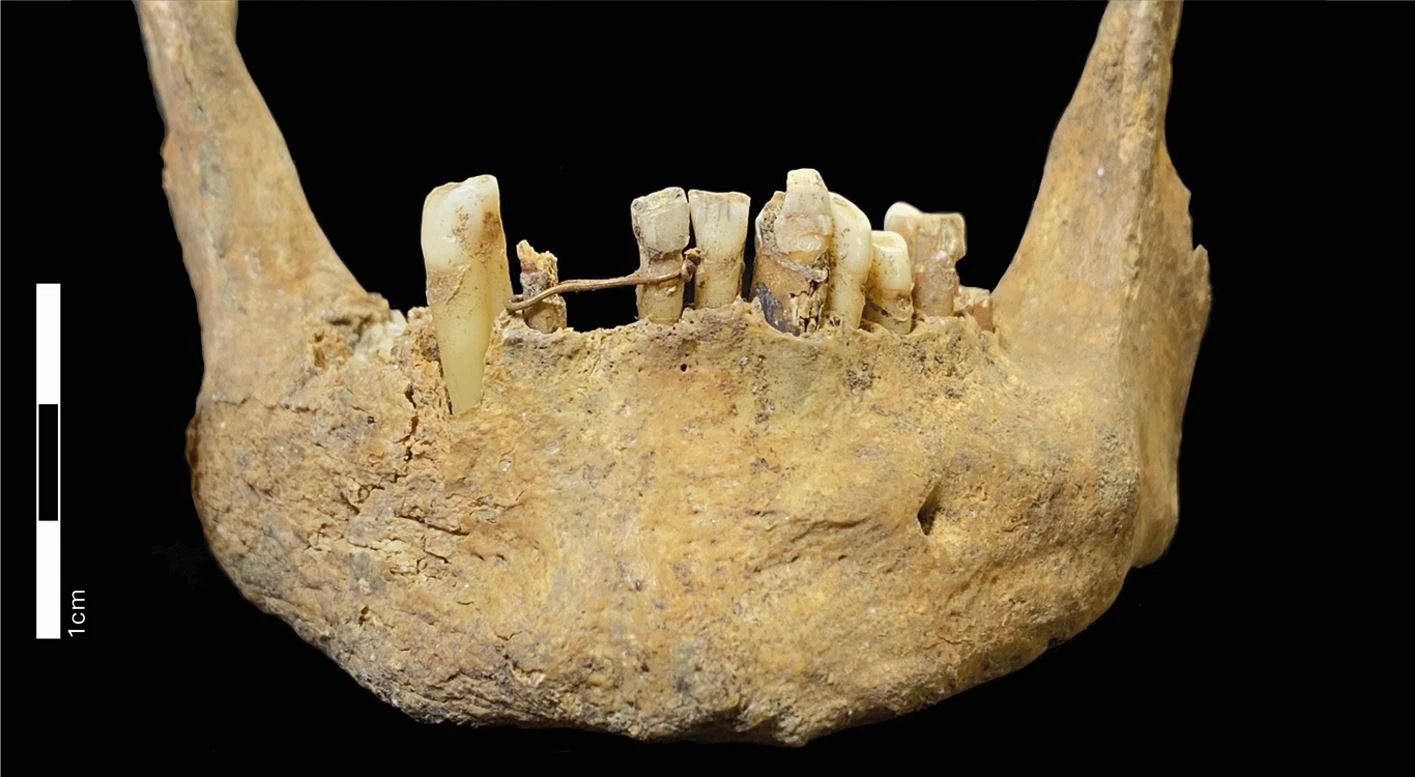
The earliest known example of restorative dentistry in Scotland has been outlined by researchers at the University of Aberdeen.
A middle-aged adult male, who lived between 1460–1670 CE in Aberdeen, and was buried in the East Kirk of the parish church of St Nicholas, was observed to have a gold ligature fixed to the right lateral and left central mandibular incisors, forming a bridge for the potentially missing right central incisor.
As he lived before the establishment of dentistry as a profession during the 19th century, the ligature was likely placed by a semi-skilled practitioner, such as a jeweller, barber or ‘dentatore’.
The archaeological and documentary evidence indicates he was a relatively wealthy member of the community, based on his prestigious burial location, and that he was able to afford this type of dental work.
Researchers say that given the social importance of an individual’s appearance during the Late Medieval and Early Modern era as an outward expression of their moral character, it is likely the rationale for undergoing this procedure extended beyond retaining masticatory abilities and oral function.
The most likely purpose for the gold wire ligature, they said, was to attempt to either retain the right lateral incisor or to provide a bridging scaffold to sustain a prosthetic tooth.
1 Comment
This discovery provides valuable insight into the history of dentistry and demonstrates how archaeology can reshape our understanding of early healthcare innovation and human ingenuity.