

A serious cycling accident threatened his teeth … and life
Against the Odds award winner shares how orthodontic treatment helped put his smile back on track
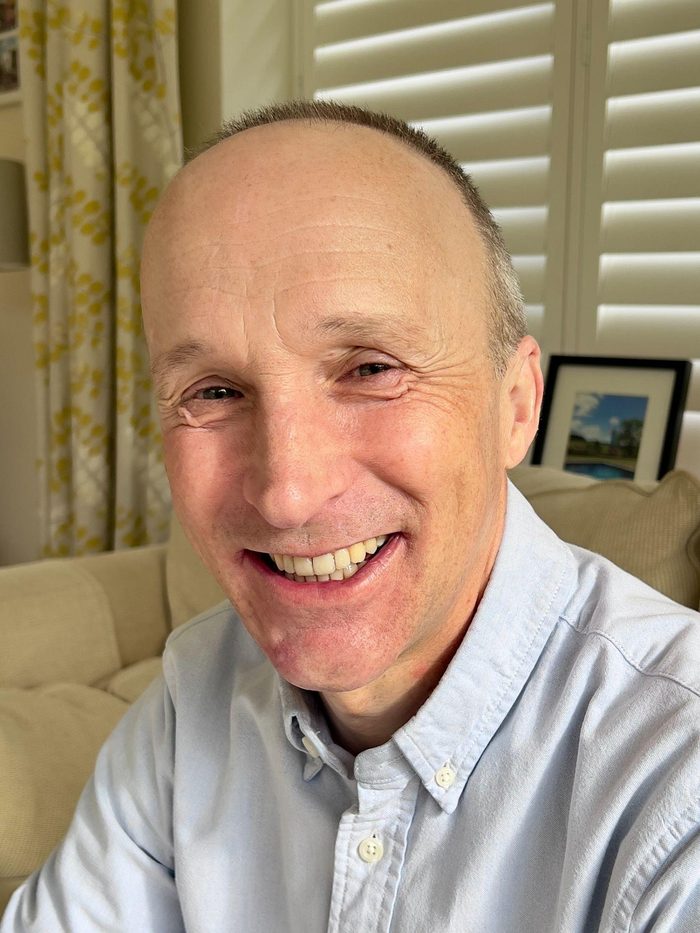
After a serious cycling accident left his jaw fractured, his bite disrupted and his front teeth potentially at risk, Simon Ketteringham feared he might lose his smile. With the help of his orthodontist, Megan Hatfield, and a multidisciplinary clinical team, he was able to resume treatment and complete an orthodontic journey that has restored his confidence. This was recognised with his winning of the British Orthodontic Society ‘Against the Odds’ award.
For Simon, completing orthodontic treatment at Wetherby Orthodontics, West Yorkshire was about much more than having straighter teeth. It marked the end of a journey that had begun with a desire to feel more confident about his smile, been interrupted by a life-changing accident, and ultimately involved close collaboration between his orthodontist and hospital specialists.
Having considered orthodontic treatment for years, he initially dismissed the idea following his poor experience with an uncomfortable removable appliance as a teenager. However, it bubbled along in the back of his mind and when his 15-year-old son began undergoing orthodontic treatment, he spoke to his own dentist, Sian, who recommended orthodontist, Megan.
Although he was initially unsure about going ahead, Megan’s professional, balanced approach helped him make his decision. She explained the available options, including more complex approaches, and discussed their advantages and disadvantages before he chose fixed braces.
He began treatment in April 2024, hoping to achieve a straighter smile and greater confidence. Around ten months later – not long before his treatment was due to be complete – an unexpected accident dramatically changed the course of his treatment.
A serious accident puts treatment at risk
An accident while cycling left him with multiple injuries, including a fractured jaw, broken ribs and a fractured wrist. He was airlifted to Leeds General Infirmary (LGI), where he received emergency trauma care before undergoing surgery to repair his jaw.
The injuries included a Le Fort fracture which significantly disrupted his bite. His orthodontic appliance was also badly damaged in the accident, with broken brackets and distorted wires, while several teeth were mobile.
Megan arranged for the practice to be empty when he returned so that his damaged braces could be assessed and removed safely. She liaised with the maxillofacial team at LGI and Simon to coordinate the next steps and help ensure that his orthodontic treatment could continue appropriately.
At that stage, the immediate priority was to manage the injuries and stabilise his condition. The future of his front teeth was uncertain, and there was a real possibility that he may lose one or two.
Simon recollects: “Everything was a bit of a blur at the time because of the injuries, surgery and medication. I remember being on the tarmac and, strangely, being excited about going in the helicopter – I had always wanted to! The hospital team were fantastic, and I had a steady stream of visitors while I recovered. It was a difficult period, but I tried to keep my spirits up.”
Working together to protect his smile
The complexity of the injuries meant that orthodontic treatment could not simply continue as planned. Megan worked closely with the maxillofacial team, sharing pre-treatment photographs and discussing the position of his teeth and the effect of the trauma on his bite.
Following jaw surgery, the clinical teams carefully considered when it would be appropriate to resume orthodontic treatment. The aim was to coordinate the different stages of care, allowing healing and surgical recovery to take priority while avoiding unnecessary delays to the orthodontic plan.
Megan also maintained contact with his general dental practitioner, Sian, as the team considered the wider implications of the accident. Some of the fractured front teeth required restorative treatment, including composite bonding, while discolouration and the condition of the teeth would need to be addressed. Retainers would also need to be remade once treatment was complete.
For Simon, the reassurance of having a team working together was invaluable. “Megan was positive throughout, even when things looked pretty bad,” he said. “She was realistic about the fact that we might lose one of the front teeth, but the plan was to keep moving forward where it was safe to do so and get everything into the right position. The care I received from Megan and her team, as well as the team at LGI, was exceptional.”
Despite the physical discomfort, a restricted diet – initially liquid and then soft foods only – and a prolonged period of recovery, orthodontic treatment was eventually able to resume. His braces were replaced following surgery, and the team continued to monitor his progress, working towards the best possible outcome in the circumstances.
More than a straighter smile
By September 2025, the treatment had reached its final stages, with the brackets removed and the finishing touches completed. After everything he had been through, the moment his braces came off carried an unexpected emotional significance.
Although his front teeth will need ongoing monitoring following the trauma, Simon is delighted with the outcome and has returned to the activities he enjoys, including cycling. He recently returned from Girona, Spain, a popular cycling destination, and continues to travel around Europe, mentoring younger cyclists.
He has also recommended Megan to a friend of his wife who had been considering orthodontic treatment after experiencing relapse following braces as a teenager. The friend was particularly conscious of her teeth during video calls for work, something Simon could readily understand from his own experience.
The clinical perspective
Megan Hatfield, orthodontist at Wetherby Orthodontics, said: “Simon’s case presented some significant challenges because of the severity of the trauma and the impact on his teeth, their supporting structures and his bite. Our priority was to work closely with the maxillofacial team to ensure that his surgical care and orthodontic treatment were coordinated appropriately.
“Following an injury of this nature, it is important to assess each tooth individually, monitor its response and recognise that the long-term prognosis may remain uncertain. The aim was to maintain the best possible tooth positions and bite while allowing the injuries to heal and addressing the restorative needs of the front teeth.
“This case really demonstrates the importance of communication between the orthodontist, general dental practitioner and hospital team. We had to adapt the original treatment plan as the situation developed, while keeping Simon informed and involved in decisions throughout.
“I’m delighted that he has completed treatment and is so pleased with his smile. We will continue to monitor the affected teeth, but it has been incredibly rewarding to see him reach this stage after such a difficult experience.”
The case highlights how orthodontic care can form part of a wider, multidisciplinary approach following serious facial trauma. While every patient’s circumstances and outcomes are different, careful planning, communication and ongoing assessment can help clinicians work towards the best possible result.
For Simon, the outcome is personal. What began as a decision to improve his smile became a much longer journey involving surgery, recovery and uncertainty. Completing treatment has given him a renewed sense of confidence and a reason to smile openly in photographs again.
As part of his recognition through the British Orthodontic Society’s Against the Odds initiative – sponsored by TOC -, he intends to donate his prize money to Leeds General Infirmary and Yorkshire Air Ambulance in gratitude for the care he received.
Pardeep Saini, Chair of the BOS Orthodontic Specialists Group, said: “Orthodontics is about more than the alignment of teeth; it can also have a meaningful impact on a person’s confidence and self-perception. The Against the Odds competition continues to recognise the exceptional work taking place across our profession and the difference orthodontic treatment can make to people’s lives. For many, a confident smile can contribute to greater self-esteem and a more positive sense of self.”