
Digital dentistry: part two
From optional innovation to essential competence
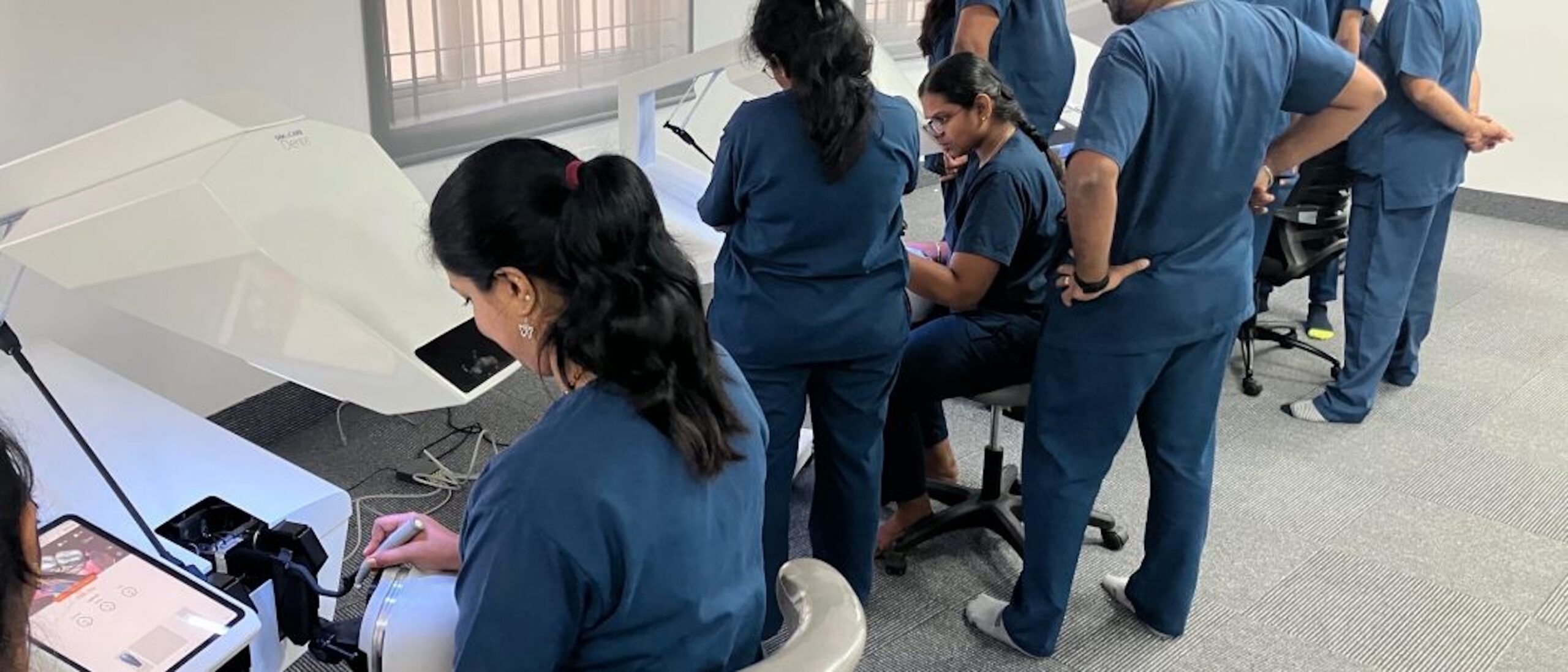
Digital technologies such as intraoral scanning, CAD/CAM, 3D printing, CBCT and AI-supported systems are already reshaping clinical dental practice, yet their integration into dental education remains inconsistent. This creates a gap between what students learn and the workflows they will encounter after graduation. This article argues that digital competence should be treated as a foundational professional skill rather than an optional enhancement.
Effective preparation requires graduates who are fluent in both analogue and digital approaches, able to select appropriate methods, and capable of critically evaluating digital outputs. Key risks include cost, faculty readiness, curriculum pressure, equity of access, and the potential for deskilling if tools are used uncritically. A measured, outcomes-focused approach that prioritises faculty development, progressive integration across disciplines, and hybrid teaching is proposed. The aim is not technological enthusiasm or resistance, but the development of clinicians who can use digital systems wisely and with clinical judgement intact.
Digital technologies are already reshaping clinical dentistry. Intraoral scanning, CAD/CAM, 3D printing, CBCT, guided surgery, teledentistry and AI-supported systems form part of everyday workflows in many practices. Yet their integration into dental education remains uneven. This gap between clinical reality and educational preparation deserves careful attention.
The goal is not to replace traditional skills with technology, but to develop graduates who are fluent in both analogue and digital approaches. Clinicians need the ability to move between workflows, choose the most appropriate method for each clinical situation, and recognise sources of error in complex digital systems.
Technical proficiency alone is insufficient. Discernment, adaptability and ethical responsibility matter equally. Graduates must be able to evaluate new tools critically, understand their limitations, and consider their implications for patients and the wider system of care. In this light, digital competence is no longer an optional enhancement. It is becoming
a foundational element of professional readiness.
The potential contribution of digital tools
Digital tools can make processes that were once largely intuitive more visible and teachable. AI-supported visualisation, virtual design, and simulation allow anatomy, restorative planning, and procedural steps to be examined, compared, and discussed with greater clarity. Immediate feedback becomes possible, assessment can be more objective and communication between student, teacher and patient can improve through shared visual references.
These capabilities are particularly useful in simulation, formative assessment and shared decision-making. Students can identify preparation errors more clearly, compare their work against defined standards, and explain treatment options with visual mock-ups that patients can understand. When used thoughtfully, digital technology does not simply accelerate learning, as it can support more deliberate practice and greater confidence.
It also opens possibilities for more resource-conscious education, such as reducing material waste, limiting the need for repeated physical models and supporting more efficient use of limited clinical resources.
Risks that require attention
Progress brings genuine challenges. Cost, ongoing maintenance, rapid software change and variable faculty readiness are not minor details, as they often influence whether new approaches succeed or stall. Crowded curricula, questions of equity and access, increasing reliance on automated outputs, and unresolved issues around data privacy and AI governance add further complexity.
A more subtle risk is the gradual loss of depth. When learners accept software suggestions without understanding the underlying processes, or trust outputs without interrogating their validity, clinical judgement can erode. Dentistry rests on biological understanding, mechanical principles and experienced decision-making. These cannot be outsourced.
Hybrid education is therefore not a compromise but a necessity. Students and educators need to work with digital systems while retaining the capacity to question them, interpret them and, when required, override them. The future will be shaped less by the technologies themselves than by the professionals who use them with judgement.
A measured approach for schools
Meaningful change does not begin with the purchase of equipment. It begins with clear intention. A realistic sequence starts with faculty development and shared understanding of purpose, followed by the building of digital literacy and simulation capacity. Only then does it make sense to move into preclinical application, supervised clinical integration, and ongoing quality improvement. At the centre of any such effort should sit a simple principle: outcomes before instruments. The primary question is not which devices to acquire, but which competencies graduates need. Curricula, teaching methods and assessment can then be aligned with those goals.
Faculty development cannot be deferred. Infrastructure is most effective when planned strategically and shared rather than fragmented. Assessment should track growth over time rather than isolated performance. Quality improvement works best when it is continuous and embedded rather than occasional. Recent educator surveys examining barriers to digital adoption, together with feedback on emerging training tools such as multi-layered drilling plates, underline the importance of these practical considerations. They also highlight the value of proceeding in measured stages rather than through abrupt technological leaps. Sustainability offers an additional reason for careful implementation. Thoughtfully designed digital workflows can reduce material consumption, decrease the need for repeated procedures and support more efficient use of resources, therefore contributing to a more environmentally responsible model of education and care.
Integration across the curriculum
Digital dentistry cannot remain confined to a single course or speciality. Restorative dentistry, orthodontics, radiology, implantology, periodontics, endodontics, paediatric dentistry and teledentistry each engage with digital technologies in distinct ways, with different applications, challenges and competency requirements.Effective preparation therefore requires a longitudinal approach: competencies developed progressively, reinforced across stages of training and assessed in varied clinical contexts. This supports not only technical skill but also critical judgement and discipline-specific expertise.
The deeper question for dental education is whether schools can prepare graduates who are both technologically fluent and clinically sceptical. Producing students who can operate digital devices but cannot judge when to trust them falls short of the educational task. The most useful curriculum will neither celebrate digital tools uncritically nor reject them out of caution.
It will equip educators and students to use them wisely and ethically, with clinical judgement intact.
The authors declare that there were no prior agreements, arrangements or understandings regarding the use of any company related images included in this publication. Furthermore, the authors confirm that no conflicts of interest exist in relation to the materials presented.
Comments are closed here.