

Sensor for real-time oral health monitoring developed
It detects inflammation biomarkers with molecular precision.
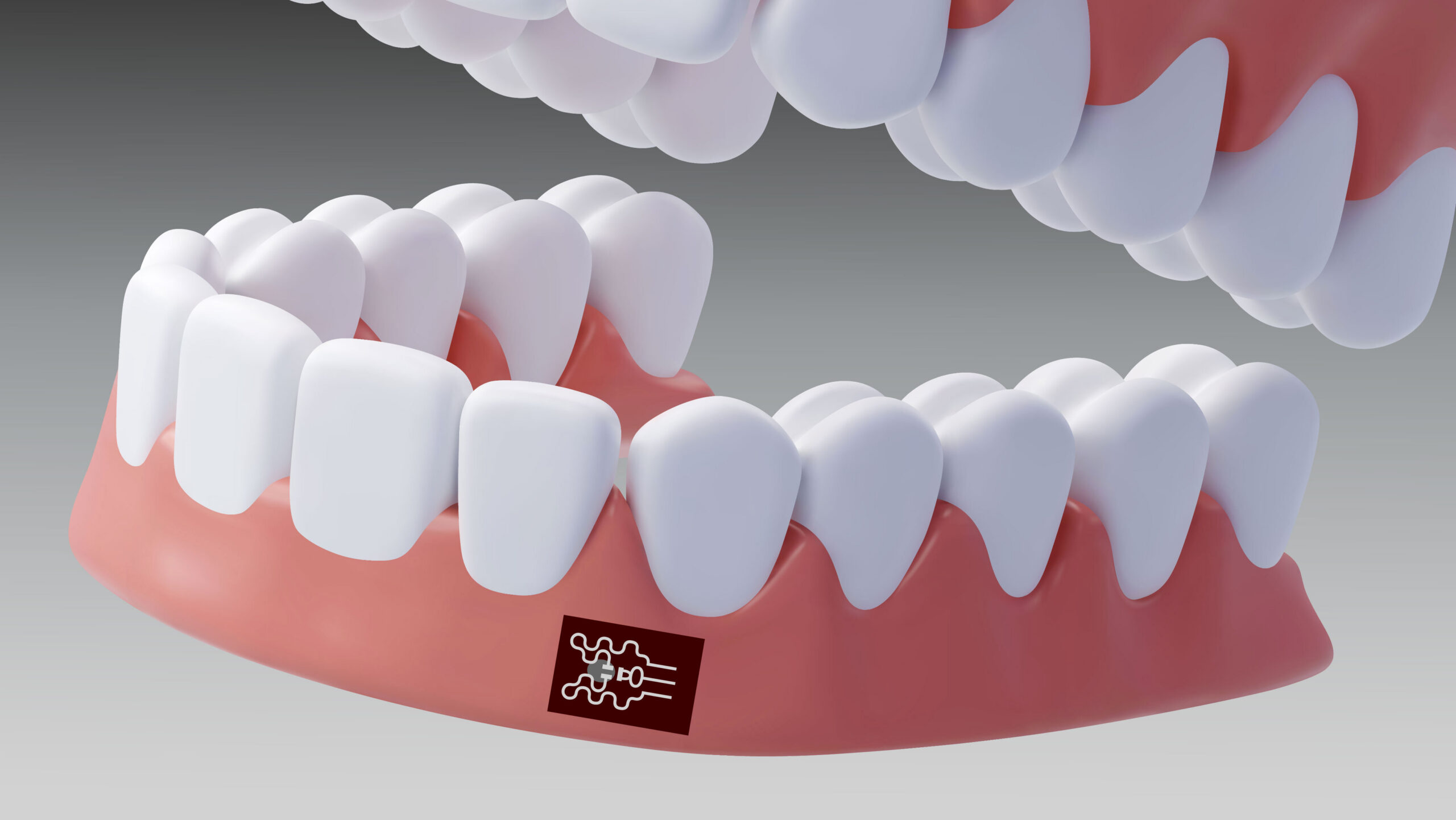
A tissue-adhesive biosensor that detects inflammation biomarkers in the mouth with molecular precision has been developed by researchers at Texas A&M University.
Dr. Chenglin Wu, Associate Professor of Civil and Environmental Engineering, has created and tested a multi-layer sensor that can function in the wet oral environment and remain attached while talking and eating.
The specialised sensing layer of the patch targets the tumour necrosis factor-alpha (TNF-⍺) protein, a key biomarker for inflammation.
The graphene-MXene sensing layer can bind specific probes that attach only to the target protein. The layer has an inherent conductivity, and when molecules such as the targeted protein bind, the change in charge can be measured. This enables highly sensitive detection at the femtogram-per-milliliter (fg/mL) level.
“For context, a patient with a viral infection might show symptoms at 10 million or 1 billion virus copies per milliliter,” said Dr Wu said. “Our sensor could detect 100 to 150 per milliliter.”
The study indicates detection at just 18.2 fg/mL. To put this in perspective, one quadrillion femtograms — that is a one followed by 15 zeros — equals just one gram. Achieving this sensitivity can be challenging, especially if unwanted biomarkers are also detected.
However, the outer layers help improve the patch’s selectivity. The tissue-adhesive hydrogel also features a selective-permeable hydrogel layer that helps filter out unwanted molecules.
“My collaborator at Michigan State University engineered a very small opening that will only allow the smaller biomarkers through,” said Dr Wu. “Combining that with the highly selective probe attached to the sensing layer makes for accurate selectivity.”
Dr Shaoting Lin, an Assistant Professor of Mechanical Engineering at Michigan State, helped develop the tissue-adhesive hydrogel and the selective-permeable hydrogel. The robust tissue adhesion also helps the accuracy of the sensing layer.
“Sensing measurements can be significantly influenced by the dynamic movement of tissues,” said Dr Lin said. “A more robust tissue bond allows for a more reliable sensing performance independent of the strain.”
The researchers underlined that oral infections can cause serious health problems, such as gum disease and tooth loss, and can become more severe if left untreated. They said ability to quickly diagnose infections before symptoms appear could shift oral healthcare from reactive responses to anticipatory action.
Comments are closed here.