
Root canal treatment reduces heart disease and diabetes risk
In the first of its kind research, a King’s College London team tracked changes in blood chemistry following root canal treatment for apical periodontitis.
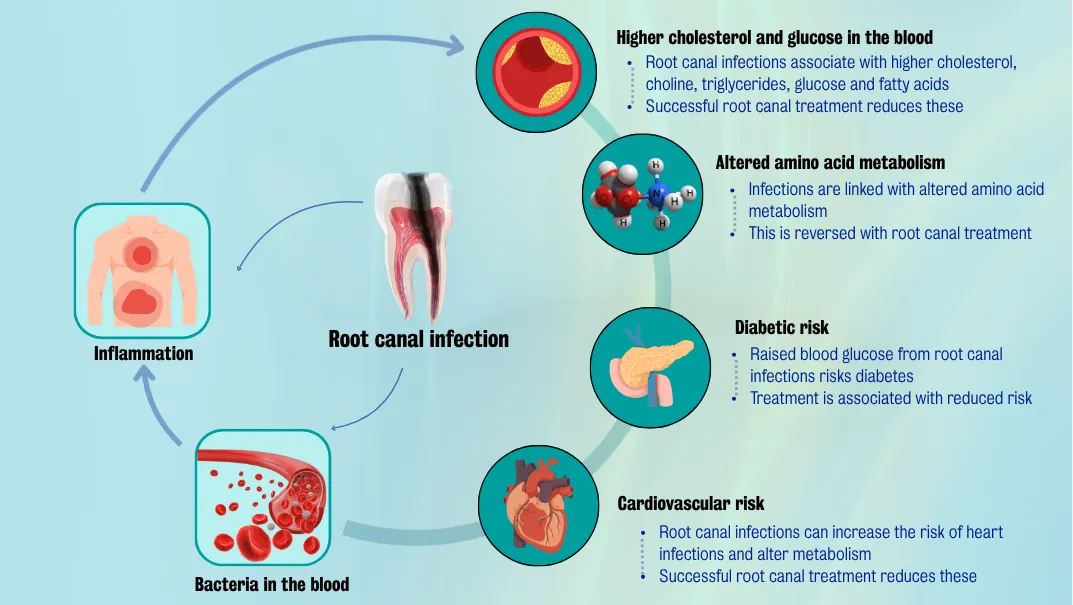
Root canal infections can cause bacteria to enter the blood, leading to inflammation, heart disease and diabetes risk.
Successful root canal treatment could reduce inflammation linked to heart disease and improve levels of blood sugar and cholesterol, according to a study.
In the first of its kind research, a clinical study by King’s College London tracked changes in blood chemistry following root canal treatment for a common dental infection (apical periodontitis). The infection can cause bacteria to enter the bloodstream and increase inflammation, associated with risks to cardiac health and reduced ability to control blood sugar levels.
Despite the link between the infection and wider health impacts, the association between successful root canal treatment and the benefits to heart and metabolic health had not been investigated until now.
The team discovered that successful root canal treatment was associated with:
- Improved glucose metabolism: Blood sugar levels dropped significantly over two years after treatment, a key factor in preventing diabetes
- Better lipid profiles: Short-term improvements in blood cholesterol and fatty acid levels, which are closely linked to heart health
- Reduced inflammation: Key markers of inflammation, often linked to cardiovascular risk and other chronic conditions, decreased over time
- Oral bacteria linked to body-wide effects: Bacteria from infected teeth were associated with changes in the body’s overall metabolism
The study followed the health of 65 patients from Guy’s and St Thomas’ NHS Foundation Trust over two years after root canal treatment. Scientists analysed molecules in the blood of patients to reveal how the body processes sugar, fat, other key substances, and responds to disease and treatment. They used nuclear magnetic resonance (NMR) spectroscopy to analyse proteins in the body.
The findings suggest that monitoring blood metabolic markers, such as glucose, fats known as triglycerides and the protein tryptophan could help assess recovery and risk after dental treatment.
Lead Author Dr Sadia Niazi, Senior Clinical Lecturer in Endodontology, King’s College London, said: “Our findings show that root canal treatment doesn’t just improve oral health – it may also help reduce the risk of serious health conditions like diabetes and heart disease. It’s a powerful reminder that oral health is deeply connected to overall health.
“Long-standing root canal infections can allow bacteria to enter the bloodstream, trigger inflammation, and increase blood glucose and fats levels – raising the risk of serious health issues like heart disease and diabetes. It is vital that dental professionals recognise the wider impact of these root canal infections and advocate for early diagnosis and treatment.
“We also need to move towards integrated care, where dentists and general practitioners work together to monitor the risks through these blood markers and protect overall health. It’s time to move beyond the tooth and embrace a truly holistic approach to dental care.”
Comments are closed here.