
Skills planning not an option, but a necessity
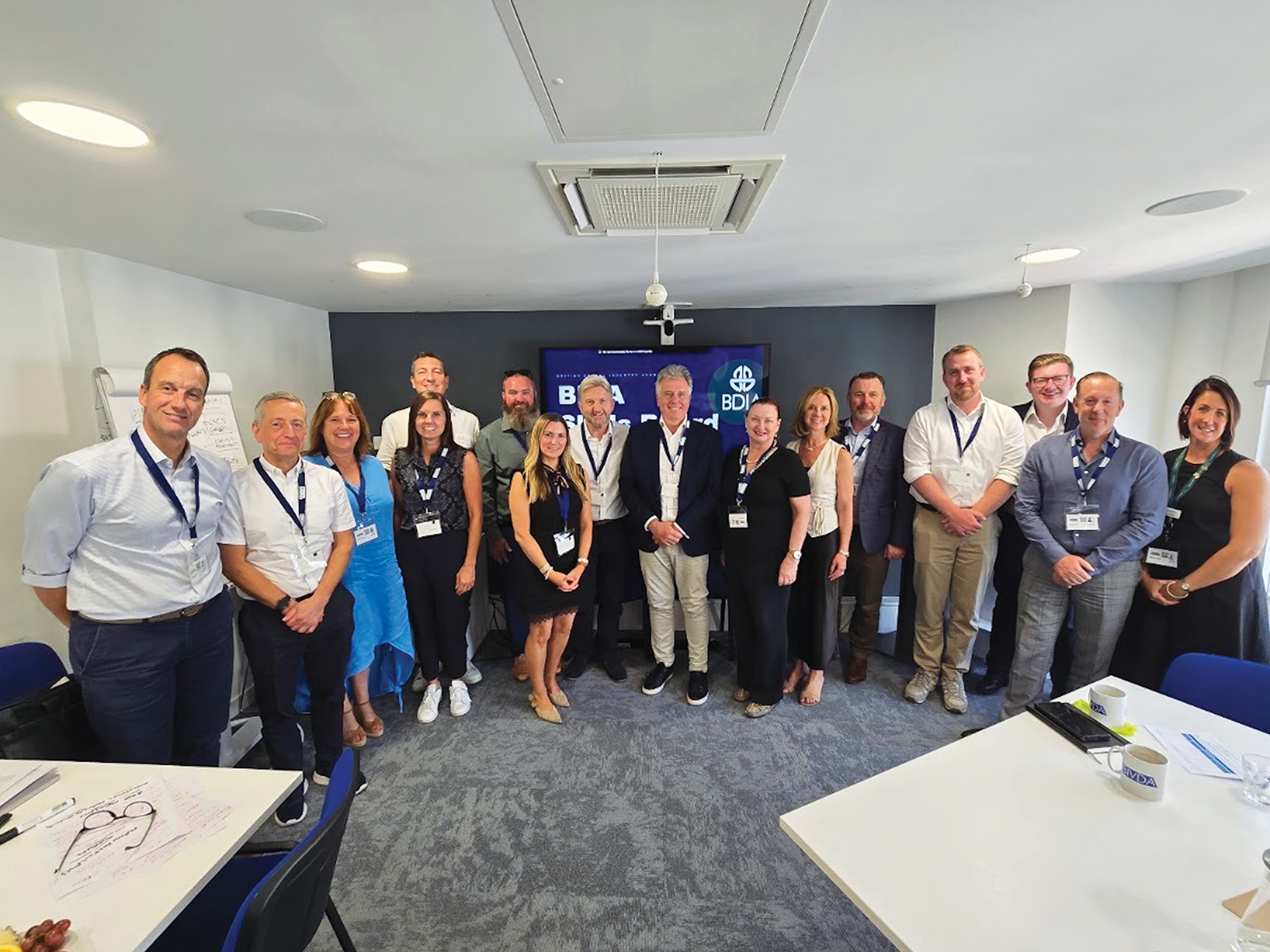
Stacey Coughlan (Acteon), Neil Carmichael (ADG), Will Cooper (Takara Belmont), Michelle Lally (Consult), Matt Turner (Dental Directory), James Paredes (Dürr), Harry Morris (EMS), John Maloney (GC), Scott Selbie (Henry Schein), Sarah Tipping (KaVo), Alex Breitenbach (NSK), Janet Pickles (R A Medical), Simon Rich (Skillbond), Helen Fielden (Solventum), Brandon VanHeerden (Trycare), Jamie Crinigan (Skills4), Sam Wells (Perfection Plus), Luke Broadhurst (Planmeca), Dan Hodgson (Prima), Joe Earl (Dental Sky) and Naveen Kumar (DMG)
The British Dental Industry Association (BDIA) has been at the heart of UK dentistry for more than a century. Founded 103 years ago, it remains the only organisation representing manufacturers, distributors and service providers supplying equipment, products and services to the dental profession.
Led by its members, the association works through its council and special interest groups to champion the interests of the sector, while helping shape its future. That influence extends well beyond dentistry. Edmund Proffitt, the Chief Executive, chairs the UK MedTech Forum and serves as a trusted adviser to the Medicines and Healthcare products Regulatory Agency (MHRA), giving the BDIA a respected voice in discussions that affect industry, regulation and patient care.
That reach gives the BDIA a clear view of the challenges facing both the dental industry and the profession it supports. Backed by a strong and engaged membership, the association is already leading work on issues including counterfeit and grey market products and sustainability. Now, it is focusing on another pressing issue: skills.
The BDIA is developing a national sector skills plan, designed to help the industry respond to changing demands while ensuring the dental profession has access to the skilled workforce it needs to maintain the highest standards of patient care. So, why has this become such an urgent priority?
The changing skills landscape
UK skills policy continues to evolve, encouraging the sector to work together so that it is well placed to benefit from increased investment and focus. This shift is not only being driven by policy. As demands on the profession’s infrastructure and technology increase, so does the need for industry to keep pace. Some of the recent changes introduced by government include:
- Skills England, established in June 2025, now leads on UK sector skills evidence following the integration of the former Institute for Apprenticeships and Technical Education.
- The Industrial Strategy identifies eight priority growth sectors, including advanced manufacturing, digital and technologies and life sciences, each supported by its own sector plan.
- Foundational sectors, such as logistics, sit outside these priority sectors but are recognised as vital to supporting them.
The UK Government has also announced dedicated skills investment for the engineering, defence and digital sectors, alongside a new network of Technical Excellence Colleges.
While government policy is never the sole driver, it is important for the sector to make the most of any investment or support that ultimately improves outcomes for customers and, in turn, patients.
Applicability in the devolved nations
While funding streams and policies may differ across the UK, the principles of the Skills Board apply across the whole of the dental sector and particularly in the devolved nations. “BDIA is the national industry association, therefore what we develop has to be transferrable across the devolved nations,” said John Maloney, Chair of the Skills Board, BDIA Council Member and GC Director and Country Manager. “As the project boards become established, a focus will be on working with colleagues in Scotland, Wales and Northern Ireland to help shape our understanding of the opportunities and challenges faced across the UK.”

Purpose and outcomes of the Sector Skills Board
The purpose of the Skills Board is to bring industry together to ensure that the sector – and, ultimately, the profession – has the skills it needs now and in the future. More importantly, it is about ensuring both sides, equipment and service providers, and practitioners, are aligned and engaged. While the Board operates independently, it recognises the interdependence between industry and the profession and is committed to ensuring industry plays its part in shaping and supporting future change.
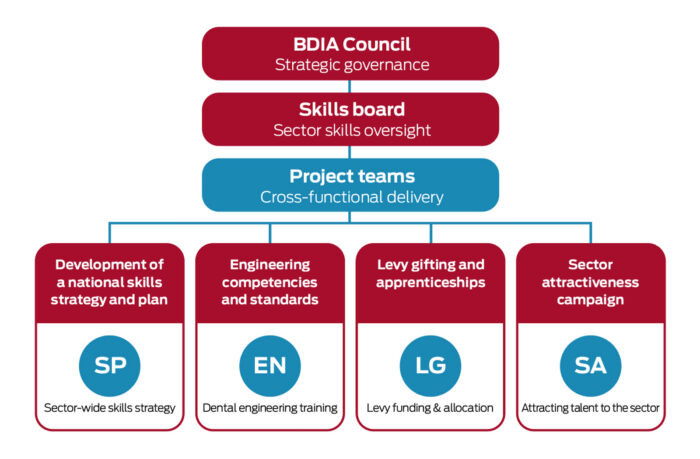
The Board Chair will report directly to the BDIA Council and oversee the project’s strategic direction.
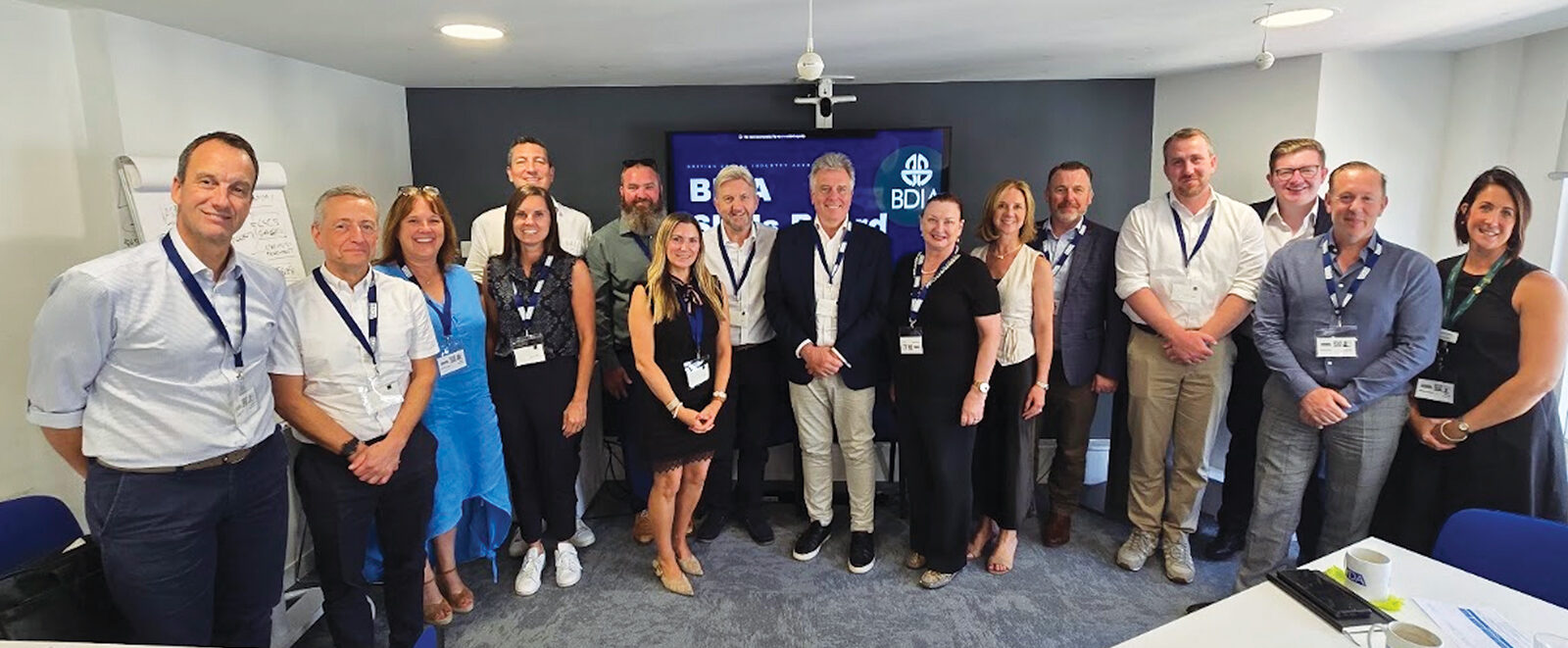
It comprises Stacey Coughlan (Acteon), Neil Carmichael (ADG), Will Cooper (Takara Belmont), Michelle Lally (Consult), Matt Turner (Dental Directory), James Paredes (Dürr), Harry Morris (EMS), John Maloney (GC), Scott Selbie (Henry Schein), Sarah Tipping (KaVo), Alex Breitenbach (NSK), Janet Pickles (R A Medical), Simon Rich (Skillbond), Helen Fielden (Solventum), Brandon VanHeerden (Trycare), Jamie Crinigan (Skills4), Sam Wells (Perfection Plus), Luke Broadhurst (Planmeca), Dan Hodgson (Prima), Joe Earl (Dental Sky) and Naveen Kumar (DMG).
Its role is to oversee development of a wider Sector Skills Plan, helping the industry understand where it stands today, where it needs to be and the opportunities and challenges ahead.
The board will oversee four key areas of work identified at its first meeting:
- Development of a national skills strategy and plan.
- Engineering competencies and standards.
- Levy gifting and apprenticeships.
- Sector attractiveness campaign.
“When I joined the BDIA 18 months ago,” said Commercial Director Mark Hyde, “I recognised that the industry is multi-sector –manufacturing, logistics, life sciences, technical and more – and we needed a joined-up approach to maximise opportunities, both for investment and, critically, for attracting and retaining talent.
“The BDIA sits at the heart of industry and the profession and is well placed to coordinate and facilitate this critical programme of work. Skills development isn’t an initiative; it’s a commitment to embed a culture of learning and ambition… the ambition to grow, individually, as companies and as a sector.”
At the outset, the BDIA asked its members: “Do we have the right skills for our current and future sector needs?” The responses highlighted key themes, both for now and as a warning for the future. Clearly, technology adoption, both to improve efficiency and to support the delivery of oral health, is a priority for the whole sector, as is attracting the next generation of talent.
Key themes included:
- More demanding customers
- An ageing workforce
- Technology
- A more flexible and fluid workforce that can react to the ever-changing landscape
- Developing future leaders to come up through the ranks and support current business leaders
- An attractive sector.
“The dental industry is multi-sector, covering manufacturing, logistics, life sciences, engineering and digital/technology,” said Edmund Proffitt, BDIA’s Chief Executive.
“We appear in many different spaces, but nowhere do we have a dedicated reference point; and so, we don’t have a single, strong voice championing the sector’s needs. With the breadth of knowledge and experience across our membership, and particularly on this Board, the BDIA is well placed to be that central point and to provide a clear benchmark and plan.”
Ultimately, says the BDIA, this will deliver the following for the wider sector:
- A clear understanding of current and future skills needs challenges and opportunities.
- Maximised opportunities for skills investment.
- Investment routed by and to members.
- A better-skilled workforce.
- More cost-effective recruitment.
- A leaders and future leaders’ network.
Skills policy relevance to the BDIA Skills Board workstreams
- Sector attractiveness / 35 under 35: the levy reform’s explicit prioritisation of under-25s (fully funded SME training, new SME incentive payments, Foundation Apprenticeships) is a direct national tailwind for the campaign: funding barriers to bringing in young talent are being actively removed.
- Engineering standards: the national push on skills passports/digital wallets mirrors the same portability problem identified for dental engineering. It is worth referencing as a precedent when engaging DfE/Skills England, and worth watching construction and clean-energy passport schemes as a model.
- Levy gifting/Investment: the tighter 12-month fund expiry and the rise in employer co-investment from 5% to 25%, once levy funds are exhausted, are the two changes member companies are most likely to feel financially — relevant to how the workstream frames levy transfer/gifting mechanisms going forward.
- Sector skills planning: remain the statutory local vehicle that providers must have regard to — worth checking whether dental-relevant Local Skills Improvement Plans already reference the sector, or whether this is a gap the Skills Board should look to close.
Comments are closed here.