

Beyond surgery: restoring implants with confidence
Embracing a prosthetically-driven approach and working with trusted solutions can deliver exceptional implant-retained smiles for your patients, writes Coltene's Nicolas Coomber.

Dental implantology remains an area of rapid growth in UK dentistry. Offering a permanent solution to partial or complete edentulism, it appeals to patients of all ages and backgrounds. Modern technologies, techniques and materials are also making the treatment modality more predictable and accessible than ever before, elevating outcomes and enabling more individuals to take advantage of the solutions available.
For clinicians offering the surgical and/or restorative stage of implantology, it is crucial to be aware of all the factors influencing success. With comprehensive training and experience, alongside meticulous treatment planning and delivery, any dentist can build a thriving dental implant business. Though much emphasis is often placed on the surgical phase of the workflow, properly preparing for and executing the restorative aspect is just as important for success.
A successful treatment option
With many tools in the armamentarium, today’s clinicians have the opportunity to consistently achieve success in the field. A systematic review found the average five-year survival of single-unit implant-retained prosthetics to be 95.6%. Specific papers reviewed found the prosthetic survival rate to be as high as 95.2% at 10 years1. This provides confidence that implants can be restored in a predictable and long-lasting way, when approached with sufficient planning, products and techniques. All of these are essential to mitigating potential complications and increasing the chance of treatment success.
Overcoming biological complications
As with any area of dentistry, complications can occur when restoring implants. Some of the factors affecting implant success and survival are the number of implants placed in the mouth2 and the location of the implants3.
Peri-implantitis is another leading cause of implant complications, with a prevalence of 20% at patient-level and 13% at implant-level4. Research has found several links between the development of the disease and prosthetic considerations. For example, residual cement around the restoration can induce marginal bone loss and increase the risk of peri-implantitis. A poorly designed implant-abutment interface can also increase bacterial infiltration and disease risk5.
This highlights the importance of creating an effective emergence profile when designing the implant-abutment-crown connections. Though more studies are needed to determine the impact of the emergence angle on aspects like marginal bone loss6, evidence so far suggests that the right angle increases will support peri-implant tissue health and stability. For instance, emergence angles of <30 degrees and of a concave or straight design are associated with a decreased peri-implantitis risk7. An effective prosthetic design is also critical in ensuring the cleansability of the restoration and implant site, further minimising the risk of peri-implant disease8.
A mechanical issue too
In addition to biological factors, there are various mechanical complications relating to implant-supported prosthetics reported in the literature as well. Some of the most common include fractures in the veneering material, loss of access hole, abutment or screw loosening and loss of retention of cemented fixed prosthetics9. There is also evidence of fracturing screws, frameworks, and abutments, where the restoration is not planned and executed correctly10.
Many of these challenges can be avoided with sufficient implant planning. A prosthetically-driven approach is often implemented as a way to identify the best position and angle to allow for a functional, aesthetic and durable restoration. Everything from bone quality and quantity to occlusal forces, surgical technique and prosthetic design should be taken into consideration, working together to optimise the treatment outcome11.
Time to be materialistic
With all of this in mind, the restorative material must also be chosen carefully to ensure that aesthetics and longevity can be achieved. Any implant-retained restorations should be created with confidence that they will reliably withstand masticatory forces, blend with the natural dentition and facilitate a good marginal seal to keep bacteria at bay for a reduced risk of peri-implant disease.
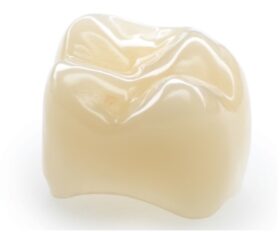
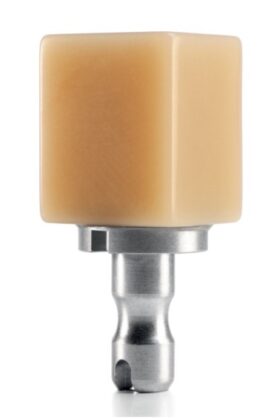
The BRILLIANT Crios from COLTENE offers such a solution for single-unit implant restorations. Its outstanding bonding values, excellent marginal seal and high wear resistance all afford peace of mind in the quality and durability of the restoration it creates. Particularly important for implant-retained restorations, the material also exhibits a dentine-like modulus of elasticity, minimising stress from chewing and the risk of material fatigue.
Be predictable
Success in implantology relies on a number of factors, with the restorative phase having a significant impact on the long-term outcome. Prosthetic design, and material selection must be deliberate in order to reduce the risk of both biological and mechanical complications. By embracing a prosthetically-driven approach and working with trusted solutions, you too can deliver exceptional implant-retained smiles for your patients.

Nicolas Coomber is the COLTENE National Account and Marketing Manager. For more information, visit colteneuk.com or email info.uk@coltene.com or call 0800 2545115.
References
- Jung RE, Zembic A, Pjetursson BE, Zwahlen M, Thoma DS. Systematic review of the survival rate and the incidence of biological, technical, and aesthetic complications of single crowns on implants reported in longitudinal studies with a mean follow‑up of 5 years. Clin Oral Implants Res 2012;23 Suppl 6:2‑21
- Sharaf MA, Wang S, Mashrah MA, Xu Y, Haider O, He F. Outcomes that may affect implant and prosthesis survival and complications in maxillary fixed prosthesis supported by four or six implants: A systematic review and meta-analysis. Heliyon. 2024 Jan 20;10(3):e24365. doi: 10.1016/j.heliyon.2024.e24365. PMID: 38317918; PMCID: PMC10839890.
- Verma A, Singh SV, Arya D, Shivakumar S, Chand P. Mechanical failures of dental implants and supported prostheses: A systematic review. J Oral Biol Craniofac Res. 2023 Mar-Apr;13(2):306-314. doi: 10.1016/j.jobcr.2023.02.009. Epub 2023 Mar 3. PMID: 36923071; PMCID: PMC10009286.
- Diaz P, Gonzalo E, Villagra LJG, Miegimolle B, Suarez MJ. What is the prevalence of peri-implantitis? A systematic review and meta-analysis. BMC Oral Health. 2022 Oct 19;22(1):449. doi: 10.1186/s12903-022-02493-8. PMID: 36261829; PMCID: PMC9583568.
- Tallarico M, Lee S-y, Cho Y-j, Noh K-t, Chikahiro O, Aguirre F, Uzgur R, Noè G, Cervino G, Cicciù M. Prosthetic Guidelines to Prevent Implant Fracture and Peri-Implantitis: A Consensus Statement from the Osstem Implant Community. Prosthesis. 2025; 7(3):65. https://doi.org/10.3390/prosthesis7030065
- Izzetti R, Cinquini C, Nisi M, Covelli M, Alfonsi F, Barone A. Influence of Prosthetic Emergence Profile on Peri-Implant Marginal Bone Stability: A Comprehensive Review. Medicina (Kaunas). 2025 Mar 17;61(3):517. doi: 10.3390/medicina61030517. PMID: 40142328; PMCID: PMC11943486.
- Lin GH, Lee E, Barootchi S, et al. The influence of prosthetic designs on peri-implant bone loss: An AO/AAP systematic review and meta-analysis. J Periodontol. 2025; 96: 634–651. https://doi.org/10.1002/JPER.24-0144
- Chankhore P, Khubchandani SR, Reche A, Paul P. Prosthetic Design Factors Influencing Peri-Implant Disease: A Comprehensive Review. Cureus. 2023 Nov 13;15(11):e48737. doi: 10.7759/cureus.48737. PMID: 38699657; PMCID: PMC11065393.
- Pjetursson BE, Thoma D, Jung R, Zwahlen M, Zembic A. A systematic review of the survival and complication rates of implant-supported fixed dental prostheses (FDPs) after a mean observation period of at least 5 years. Clin Oral Implants Res. 2012 Oct;23 Suppl 6:22-38. doi: 10.1111/j.1600-0501.2012.02546.x. PMID: 23062125.
- Kaur M, Abou-Arraj RV, Lin CP, Geisinger ML, Geurs NC. A 5-Year Retrospective Analysis of Biologic and Prosthetic Complications Associated With Single-Tooth Endosseous Dental Implants: Practical Applications. Clin Adv Periodontics. 2021 Dec;11(4):225-232. doi: 10.1002/cap.10155. Epub 2021 Apr 16. PMID: 33829671; PMCID: PMC8928153.
- Nulty, A. A literature review on prosthetically designed guided implant placement and the factors influencing dental implant success. Br Dent J 236, 169–180 (2024).
Comments are closed here.