
Let’s make health transformation a reality
The current systems for the delivery of dental care in Scotland have failed and, without change, will continue to fail
In August 2024, I shared my Reflections on the future of Dentistry in Scotland (tinyurl.com/4nr8rvsv) and my headline comments were that in terms of the Statement of Dental Remuneration (SDR): “Determination 1 continues to have fundamental flaws” and that “a paradigm shift to address primary prevention” is required.
I also provided a summary statement that elaborated on this: “A new model for appropriate remuneration of the workforce in primary dental care, that rewards the integrated and prevention-oriented agenda that the Scottish Government already aspires to, would transform the health service, improve population health and wellbeing and ensure long-term sustainability.”
It is important that we define briefly what the challenge facing the dental profession is in our role as custodians of the health of the oral cavity. Through dental caries and periodontal disease, we preside over the most prevalent non-communicable diseases that have remained consistently high for the past 30 years1. Clearly the current systems for the delivery of dental care worldwide have failed and, without a change in the approach, will continue to fail.
The fundamental problem is that in clinical dentistry we channel all of our energies into the diagnosis of dental and oral diseases and dealing with the consequences through ever more complex and expensive interventions with spiralling expenditure, while ignoring the fact that dental and oral diseases are largely preventable.
The main purpose of this article is to look at where we have gone astray in our approach to dental and oral care, and to suggest solutions, some of which are staring us in the face but our silo mentality and obsession with intervention has occluded our vision. The solutions must embrace the following principles:
- Prevention: what we do and teach in dental curricula globally is how to diagnose and manage dental diseases. In effect we let dental disease happen and we then intervene – an approach that is becoming increasingly expensive and unsustainable. Why, when we fully understand the causes of dental diseases and know how to prevent these, are we not doing it?
- Integration: we are firmly stuck in our own dental silo despite the fact that we know the value of oral health in overall health and well-being. We also know that oral diseases share common risk factors with other noncommunicable diseases such as cardiovascular disease, diabetes, obesity, cancers and respiratory disorders with a continuously growing evidence base for bi-directional relationships in causation. If we are convinced of the value of integration with medicine and other health professions in improving overall health and well-being, why are we not doing it?
- Access to care: unlike medicine, attendance at the dentist throughout the world is characterised by unique access to the healthy population as regular recalls are encouraged. This presents opportunities for screening and diagnosis of problems such as hypertension, diabetes, cardiac arrhythmia, cancers and many other conditions before they present as symptoms of disease. Early intervention is beneficial from both mortality and morbidity perspectives (e.g. in cardiac conditions and cancers), mitigates expensive interventions and improves outcomes and so makes sense from a humanitarian and financial viewpoint.
Embrace social society: in spite of the unique access dentists have to the general public, at least in some parts of the world, and the opportunities to influence and utilise the power of the public voice – we have generally not done so. We could do much more to encourage the general population to be advocates for dental and oral health and utilise this to influence policy and prevention.
Address inequalities: dental disease is characterised by a social gradient whereby those who are most deprived suffer the highest prevalence of dental disease. For the sake of equity and basic human rights we should embrace the principle of proportionate universalism whereby greater resources are provided for those in greatest need. This principle is encompassed in the UN resolution on universal health coverage, a component of the sustainable development goals (SDG3).
The transformative health agenda in Scotland and England
Understanding these principles forms the basis of strategic planning to address the problem using a transformative approach based on integration, community orientation, person centred primary preventive approach that would be fairer, more cost effective and more sustainable. Circumstances will differ from country to country and from health system to health system and so the detail of exactly how this might be implemented will vary accordingly. This article will look at how the National Health Service (NHS) in the UK and Scotland in particular might adopt a transformative approach towards the current oral health crisis with projected benefits for overall health and wellbeing.
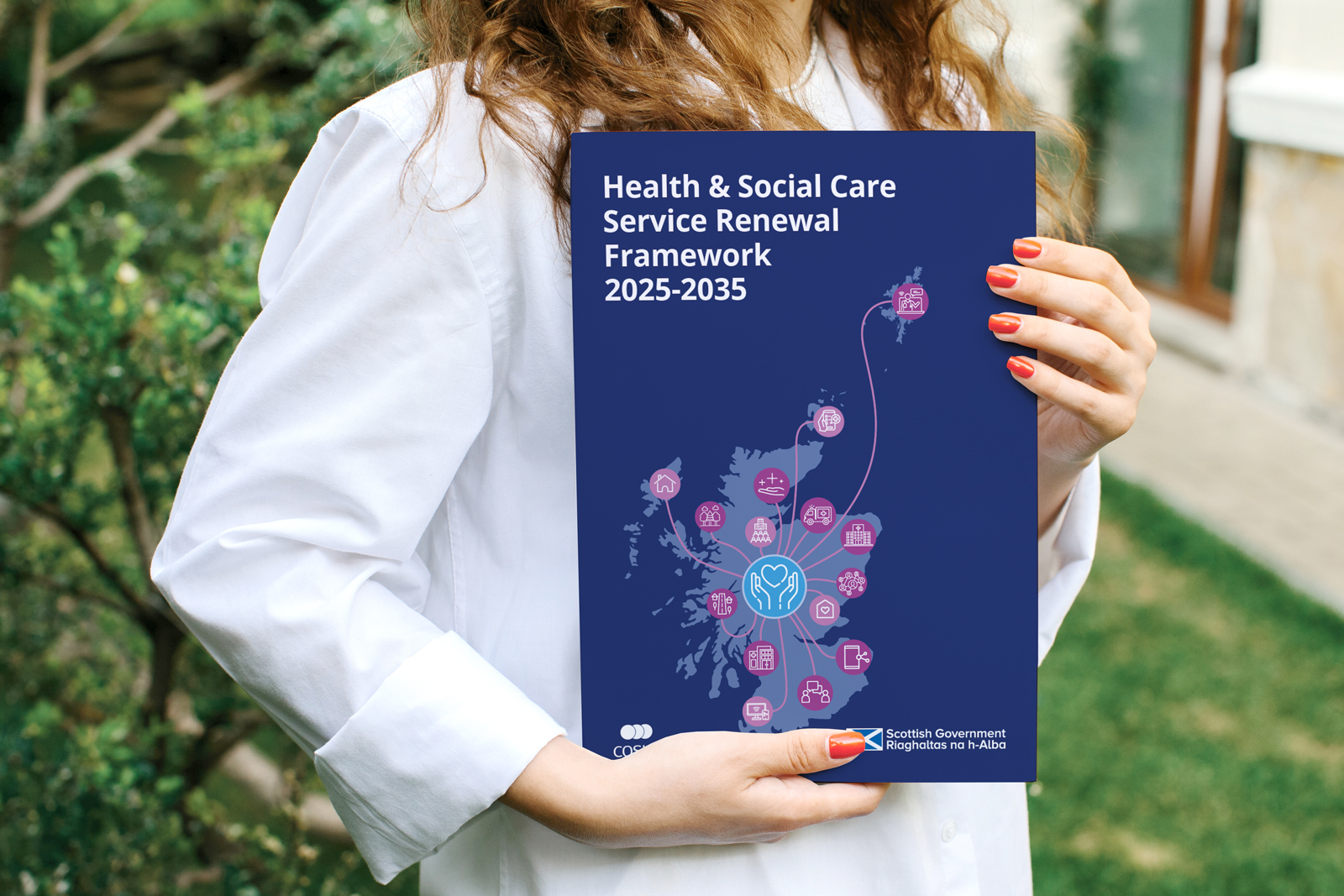
On 17 June, the Scottish Government published its Health and Social Care Service Renewal Framework as part of its transformative health agenda, followed on 3 July by Sir Keir Starmer’s 10 Year Health Plan for England: fit for the future. The latter focuses on transforming the NHS to better meet the needs of the population over the next decade. It outlines a vision for a more proactive, community-based, and digitally enabled healthcare system. The plan emphasises three key shifts: prioritising prevention over treatment, moving care from hospitals to the community and transitioning from analogue to
digital systems.
For dentistry there is a consultation document, NHS dentistry contract: quality and payment reforms, and this is an opportunity – on both sides of the border in the UK – to ensure that the voice of the dental profession will be heard around embedding oral health in the holistic care agenda. In the 10 Year Health Plan for England the Department of Health and Social Care has acknowledged that the current NHS England dental contract is not fit for purpose. With the crisis in access to dental care in Scotland, and with NHS dentistry being devolved there is the real opportunity for Scotland to develop its own agenda.
NHS Education for Scotland (NES) has embraced the agenda on health transformation and the adoption of an approach that begins with widespread consultation.
The transformation of health and care services is long overdue and has been an element on the global health agenda in recent years, culminating in the May 2021 World Health Assembly (WHA74.5) where a landmark resolution calling for integration of oral diseases into the noncommunicable diseases (NCDs) family places oral health in a new elevated platform alongside the other major NCDs, cardiovascular disease, diabetes, cancers and respiratory disorders.
Since then, the publication of the World Health Organization Global Oral Health Action Plan (GOHAP) in May 20242, with significant contributions from the World Dental Federation (FDI) Vision 20302, the Lancet Commission on Oral Health and, more recently, the Bangkok Declaration ensures there is a united voice from leaders in dentistry and oral health.
The rationale for this integration agenda is strongly endorsed by an increasingly robust evidence base for the mutual benefits of integration of oral health with medicine and with other health professions from a range of perspectives, such as the influence of common risk factors such as diet, nutrition, sugars, cigarettes and vapes, alcohol consumption, air pollution, hygiene, stress and sedentary activity (or lack of exercise). Many of these are in turn influenced by so called social and commercial determinants of health. The mutual benefits in terms of social capital, quality of life, eradication of social inequalities and health economics3 are also emerging, facilitated by the good research work of many organisations, institutions and researchers around the world, channelled via the International Association for Oral, Dental and Craniofacial Research (IADR). The overall conclusion is that oral health has been grossly undervalued in the past, and the integration of oral health with general health and the integration of health and social care have been very significant omissions in health policy over many years.
What is the fundamental change in 2025 that can make this happen?
This ‘integration for health and wellbeing’ agenda with our colleagues in medicine, pharmacy, physio, mental health and social care is now a major global priority since WHA74.5 in 2021. However, this has been in the public domain for many years through the Alma-Ata Declaration in 1978 and Ottawa Charter in 1986 both of which pledged to address the social determinants of health in primary care and empower individuals and communities to take control of their oral health. So, what is different now – and in the context of this article – is that in 2025 an unprecedented opportunity presents itself via political declarations on transformative action in both England and Scotland, fuelled by the realisation that continuing with a failed system will exacerbate the current NHS crisis and unprecedented lack of access to dental care.
The political declaration of intent to adopt a transformational agenda for the delivery of health services is welcome, as we look to the future, as it represents a shift in attitude on governmental policy at an upstream level. However, for implementation of change in the delivery of dentistry in primary care a complete overhaul of the Statement of Dental Remuneration (SDR) in Scotland, as outlined in Determination 14, is needed. Simultaneously, integration of health and social care, a stated Scottish Government priority, must be matched by actions beyond lip service to changes in the delivery of preventive services “from hospitals to community”. And with their long established access to the healthy population via regular recalls, dentists are well poised to facilitate the transition of healthcare from hospitals to communities. During the COVID-19 pandemic, dentists were frontline workers and the possibility that visits for dental checkups can also serve as opportunities for preventive vaccinations or other health screening for a range of other diseases, such as cardiovascular disease and diabetes and various other NCDs, has been successfully piloted5. Changes to the systems for remuneration should be used to influence behaviour change among dental professionals which will lead to the modifications of the ‘what, where and how’ of primary care delivery.
Is there now an actionable agenda?
The next step will be to get it right, with a plan that can be implementable, affordable and sustainable. Implementation of change can only be achieved through a combination of healthcare workforce reforms, supported by education, training and research. This article offers a perspective on how Scotland, in the health transformation space globally, can play a leading role. In the Scottish context, I would like to draw attention to a range of ongoing activities that can constructively feed into this agenda with practical, implementable steps in collaboration with a range of key stakeholders, with education (NES) and research (academic institutions). It is important to note that Scotland is well poised to lead on this with the Scottish Government’s oral health improvement programme and the Childsmile programme6; examples of ongoing initiatives that align nicely with the WHO Global Oral Health Action Plan.
Childsmile is transportable to other settings
The Scottish Government supported project and strategy for oral health in Malawi (The MalDent Project – Oral Health for All) heralds a new era in oral health in Sub-Saharan Africa with the building of a new dental school and developing a new curriculum that is geared towards the social determinants of health and primary prevention. This will use the principles of the Childsmile programme of early intervention for oral health and, through the common risk factor approach with a suitable workforce model, can address overall health and wellbeing. Childsmile is being adopted and/or adapted in many other parts of the world, and this is in alignment with the WHO call for universal health coverage (UHC) that can be applied across all NCDs in low socioeconomic status/rural settings across the world.
Pathway to implementation: the need for changes to the dental workforce
Following up the political declarations on the English and Scottish agendas for change, significant adjustment within the dental workforce in particular will be required. There is still a significant burden of untreated dental disease that will need restorative dental expertise. However, in parallel, it will be absolutely essential for dental care professionals (DCPs), such as dental nurses, hygienists and therapists, to be facilitated in their scope of practice in being able to undertake an increasing amount of restorative and preventive healthcare. The FDI Vision 2030 document7 highlights how the revision of our ideas on an expanded workforce within (via DCPs) and beyond the dental profession provides the solution worldwide, and both England and Scotland need to ensure this is addressed to meet their needs.
There will be a requirement for expanded training programmes for therapists and hygienists – and alongside this there is the current shortage of dentists in Scotland. This remains a very significant political issue, as overseas dentists face significant challenges when trying to move to the UK (and Scotland) due to a combination of regulatory, bureaucratic and practical barriers. Scotland does not have its own dental licensing body and is therefore unable to independently approve non-UK dentists to practise here, while the Overseas Registration Exam (ORE), visa issues, VT equivalence and mandatory training before NHS registration are challenges that limit the scope and speed of improving access to care.
In November 2023, WHO hosted a workshop, Integrating the social determinants of health into health workforce education and training, which informs the transformative agenda. The leaderships of the European and American Associations for Dental Education (ADEE and ADEA respectively) came together to explore a globally coordinated and regionally delivered response from Oral Health Professionals Education (OHPE) associations across the world. They issued a statement that “oral health leaders and educators need to help empower our students with a new vocabulary, passion for public health, and a reinforced understanding of the central role of oral health research in the healthcare professions”8. All this needs to be reinforced by educational institutions being proactive in the revision of their curricula and the changes made recently by the GDC in launching the ‘safe practitioner framework’, which are helpful towards achieving this objective. Interactions with colleagues in medicine are critical and the undergraduate medical curriculum could be enhanced by ensuring future doctors can work alongside their dental colleagues.
In terms of training, a fundamentally important issue in the vision for the health transformation agenda is that health professionals should have expertise in behaviour change using motivational interviewing or health coaching. In Scotland there is ongoing training in a number of health boards to introduce the ‘motivation, action and prompts’ (MAP)9 behaviour change approach for the empowerment of patients to take ownership of, and responsibility for, their own health and wellbeing. This applies to NCDs such as diabetes, obesity, cardiovascular disease as well as oral health – where there are amendable behaviours such as hygiene, dietary, recreational, exercise and stress-related lifestyle factors that influence risk and respond to longitudinal follow up. This health coaching model is evidence-based, requires regular contact and importantly can be facilitated by mobile technology, making remote monitoring possible.
Alignment with transformative healthcare research
The above mentioned WHO GOHAP10 also contains a strategic objective that points to the need for research to inform policy and clinical practice. It is highly relevant in this context to mention that UK Research and Innovation (UKRI) has funded a trans-sectoral cross-Scotland inequalities focused project, entitled REALITIES11, a project which aims to use community assets, arts, music, sport and outdoor activities in the context of ‘social prescribing’ to address health and wellbeing – and this fits extremely well with this transformative health agenda in that it aims to generate evidence and health economics data to inform government and policymakers for the transition of health care from hospitals to communities. This would fulfil what was reported in Scottish Dental magazine in August 2024 as “a new model for appropriate remuneration of the workforce in primary dental care that rewards
the integrated and prevention-oriented agenda to transform the health service, improve population health and well-being and ensure long-term sustainability.”
Peter Mossey is Professor of Craniofacial Development and Associate Dean for Internationalisation at Dundee University Dental School.
- Listl S, Galloway J, Mossey PA, and Marcenes W. Global Economic Impact of Dental Diseases. J. Dent Res, 2015, Vol. 94(10) 1355–1361 ↩︎
- World Health Organization. Global Oral Health Action Plan (2023-2030). May 2024. Available at GOHAP. ↩︎
- FDI World Dental Federation. Vision 2030: Delivering Optimal Oral Health for All. 2021. ↩︎
- World Economic Forum (WEF) White paper. ↩︎
- Statement of Dental Remuneration in Scotland: Determination 1. ↩︎
- Doughty J, Gallier S M, Paisi M, Witton R, Daley A J. Opportunistic health screening for cardiovascular and diabetes risk factors in primary care dental practices. Br Dent J 2023; 235: 727–733. ↩︎
- Childsmile homepage. ↩︎
- NHS Education for Scotland (NES): Behaviour change for Health. ↩︎
- Denis Murphy et al,(2025). The World Health Organization’s Global Strategy and Action Plan on Oral Health: A Collaborative Response From Oral Health Professionals’ Education Associations. Eur J of Dent Education: 2025; 0 : 1-12. ↩︎
- REALITIES in Health Disparities: Researching Evidence-based Alternatives in Living, Imaginative, Traumatised, Integrated, Embodied Systems. Lead Research Organisation: University of Edinburgh. ↩︎
- ↩︎
- ↩︎
Comments are closed here.