

Is Metadentistry the future?
We talk to Dr Edward Zuckerberg on Facebook and the future of dentistry
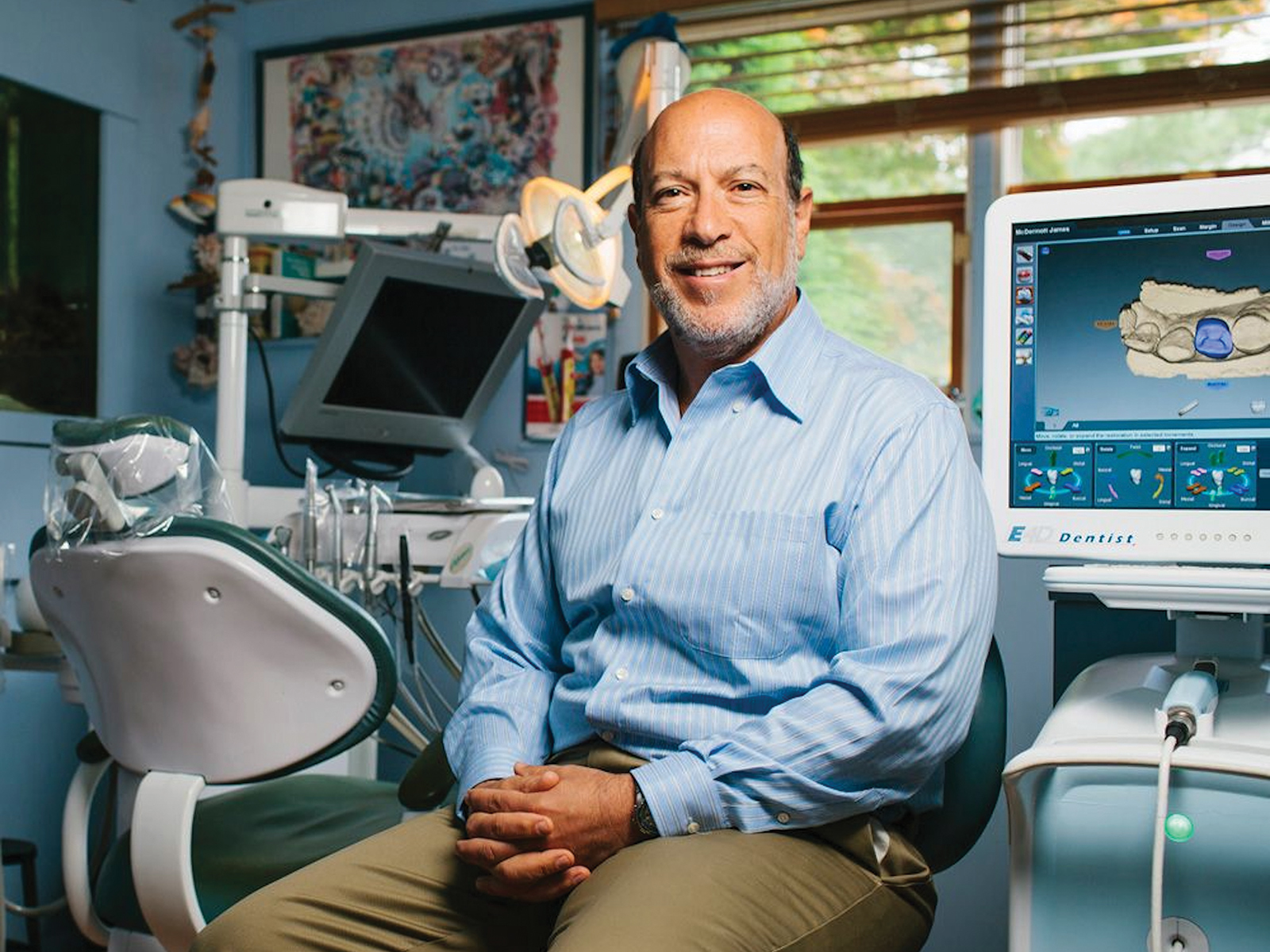
How did you come to be in the dental profession and what was your progression after qualifying?
I started Dental School in 1975 after identifying it as a career fit based on my love for science, enjoyment working with and helping people, and possessing superior hand-eye coordination as determined by
an aptitude test.
I graduated from NYU Dental School in 1978, completed a one-year general practice residency from the Brooklyn, NY Veteran’s Administration Hospital in 1979 and started in private practice later that year. Ultimately, I owned and managed my own practice from 1979-2013 in Brooklyn and later Dobbs Ferry, New York, until I sold my practice and moved to California in 2013 to be with my family.
I was approached by a well-known dentist for help with his Facebook Page. He was having an issue and found out that ‘Mark Zuckerberg’s dad’ was a dentist
Dr Edward Zuckerberg
Describe your transition from full-time practice into advising practices on their use of social media.
In 2010, I was approached by a well-known dentist and founder of Dentaltown, Dr Howard Farran for help with his Facebook page.
Dr Farran was having an issue and found out that ‘Mark Zuckerberg’s dad’ was a dentist. After I helped Howard with his issue, he convinced me to write an article Does My Office Really Need a Facebook Page? which appeared in print in the September 2010 issue of Dentaltown.
When asked to write a follow up article a few months later, I wrote an article about integrating technology into the dental practice. I was an extreme early adopter of technologies, including having the first IBM computer in my office in 1985, intraoral cameras in the late 1980s, air abrasion and lasers to replace the dental drill in some cases in the early 1990s, digital radiography and imaging in 1998, electronic health records in 2007, CAD/CAM technology for same day crowns, inlays and veneers in 2008, and so on.
I had already done some lecturing and consulting on my early adoption of technology but after these articles appeared I was inundated with requests to speak at conventions, dental schools, study clubs and was also asked to consult with and advise startup companies in the oral healthcare field.
I started integrating this teaching and consulting work into my activities in 2011 and, after selling my practice in 2013, it became my full professional endeavour. From 2011 to 2021 my topics for teaching mostly focused on technology integration and advanced social media marketing techniques for dentists – but I also discussed many of the companies I was advising that would make a future impact in oral healthcare.
Starting in 2021, my focus shifted as I became heavily invested in the correlation between periodontal disease and poor oral health and general systemic diseases including dementia, heart disease, diabetes, cancer and many others. For the last four years, I have focused on advising and doing diligence for an oral healthcare exclusive venture capital company, Revere Partners, and while I still lecture my main topic is now creating understanding of the oral-systemic connection with secondary emphasis on upcoming dental technologies under development.
Looking forward, how do you see the integration of oral-systemic knowledge reshaping the practice model – especially in terms of diagnostics, preventive care and collaboration with medical professionals?
There are many challenges to moving forward with the necessary steps to achieve this goal. Initially, I am most focused on just creating awareness, both to the lay public as well as dental and medical professionals and the insurance industry.
Ultimately, the insurance industry can either be a partner or can slow the growth of achieving this goal. Creating greater public awareness of the importance of good oral health on their overall wellness is critical, but if the testing and treatments are not being reimbursed by insurance carriers this will be a barrier to adoption.
I think it is only a matter of time before salivary diagnostic testing for every patient becomes the accepted standard of care.
We have salivary testing available now that can not only screen for oral and throat cancer at earlier than ever stages, even before lesions are visible, but can also give deep insights on the salivary microbiome and recommend professional and at-home regimens necessary to rehabilitate an unhealthy salivary microbiome.
For years, our physician brethren have included annual bloodwork as an essential tool as part of a patient’s complete physical examination and now saliva is every bit as important a tool for the dentist, not just as a tool for oral health but it follows that it will benefit the patient’s overall wellness.
Physicians are totally uneducated when it comes to oral health and my goal for the future would be to have them view dentists as primary care partners in treating patients and will make sure all their patients are in good oral health as a requisite for overall wellness.
We live in a world where most view dentistry as a siloed profession, separate from medicine, and upgrading the world view of dentists to primary care specialists, who are simply physicians who specialise in oral healthcare, will also promote this paradigm shift in treatment philosophy.
In recent years, you’ve been involved in supporting and advising companies that are innovating within the oral health space. Can you share some of the technologies or initiatives that have stood out to you?
Prior to 2021, when I was more technology focused, the biggest innovations I saw were in artificial intelligence (AI), especially using the tool to interpret images, robotics to enhance the placement of implants and preparation of crowns and restorations, smarter toothbrushes and advances in tooth straightening with clear aligners.
Since 2021, I’ve been more focused on technologies in the oral-systemic space, so therapies and technologies targeting the elimination of unhealthy periodontal bacteria have been my focus and what I see as the most impactful technologies that will play a key role in the future.
Companies like Oral BioLife which is developing a gel that is placed under the gums, after a professional periodontal visit, to continue the anti-microbial benefits and to promote regeneration of bone lost in gum disease. They will play a huge role in promoting optimal oral health and overall wellness.
Anything else you would like to add?
Change is typically slow, but we live in a generation where positive technological advances have the potential to be rapidly adopted. Look at how fast AI has become part of all our lives in a relatively short time.
The changes we need to have a real impact on our patients’ lives are something I’d love to see occur overnight, but the reality is that it will be a slow but steady movement starting with educationat many levels.
Hopefully the audience reading this can help share the information and have a positive impact to move this needed change into a reality and to have a positive impact in our in our near lifetime.
Comments are closed here.